
When you enjoy a handful of organic dates, the question of whether they are really chemical-free is more than just a health concern; it is a search for food purity. For health-conscious consumers in Europe, the primary keyword “Are organic dates really chemical-free?” is a vital starting point for understanding how these desert superfoods are grown and processed.
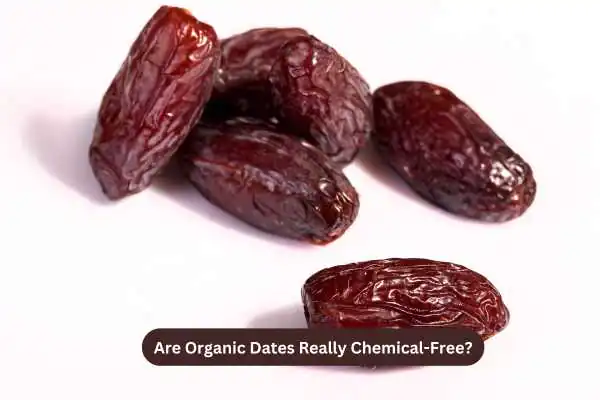
At Sahara Food EU, we understand that transparency is the foundation of trust. To maintain the highest standards of purity, many businesses choose to Buy wholesale organic Dried Fruits & Dates from sources that prioritize regenerative agriculture and strict organic compliance. But to answer the question of chemical usage, we need to look closer at the soil, the water, and the drying mats.
The “Organic” Definition: Beyond the Label
In the European Union, the “Organic” leaf logo isn’t just a marketing sticker; it’s a legal promise. To be truly organic, a date palm must be cultivated without synthetic pesticides, petroleum-based fertilizers, or ionizing radiation. However, “chemical-free” is a tricky term in science because everything—even water and air—is technically a chemical.
When we ask if they are chemical-free, we are usually asking: “Are they free from synthetic toxins?”
1. Synthetic Pesticides vs. Natural Defenses
Conventional date farming often relies on chemical sprays to fight off the Date Stone Beetle or various spider mites. These chemicals can linger on the skin of the fruit. In organic farming, these are replaced by:
-
Physical Barriers: Fine netting wrapped around date clusters to keep insects out.
-
Beneficial Insects: Introducing natural predators that eat the pests without harming the fruit.
-
Pheromone Traps: Using scents to lead pests away from the trees.
2. Fertilizers: Nitrogen vs. Compost
Conventional palms are often fed a “fast-food” diet of synthetic nitrogen. This makes the tree grow quickly, but it can lead to a watery, less nutrient-dense fruit. Organic palms are fed with compost, manure, and plant-based mulch. This slow-release feeding builds a complex soil microbiome, which results in a date with higher mineral content and a more concentrated “jammy” flavor.
The Hidden Chemicals in Conventional Processing
The biggest difference between organic and conventional dates often happens after they leave the tree. This is where the “chemical-free” claim truly earns its keep.
The Sulfite Factor
Many conventional dried fruits are treated with Sulfur Dioxide (E220). This chemical acts as a preservative and helps the fruit maintain a bright, artificial color. While sulfites are common, they are a known allergen and can cause respiratory issues for some people.
True organic dates are never treated with sulfites. This is why an organic date might look slightly darker or more “matte” than a conventional one—it’s the color of nature, not a laboratory.
Hydration and Glazing
Have you ever noticed a date that looks unnaturally shiny? Conventional processors often use a light coating of vegetable oil or, in some cases, a glucose syrup glaze to make the fruit look appealing and prevent it from sticking. Organic standards generally forbid these additives, ensuring that the stickiness you feel is the fruit’s own natural nectar.
Testing and Certification: How Sahara Food EU Ensures Purity
For a date to be sold as organic in the EU market, it must undergo a rigorous “Chain of Custody” audit. This involves:
-
Soil Testing: Checking for residual heavy metals or old pesticide runoff from neighboring farms.
-
Laboratory Analysis: Random batch testing to ensure zero detectible levels of synthetic residues.
-
No GMOs: Organic certification strictly prohibits genetically modified organisms, ensuring the seeds are as ancient as the traditions that grew them.
Baker’s Note: Because organic dates aren’t coated in oils or syrups, they absorb liquids better during the “plumping” phase of baking. This makes them far superior for creating smooth date pastes or moist cakes.
Is “100% Chemical-Free” Possible?
While organic farming eliminates 99% of man-made toxins, we must be realistic about the environment. Rain and wind don’t respect farm boundaries. Trace amounts of environmental pollutants can exist anywhere on Earth. However, choosing organic reduces your exposure to concentrated synthetic toxins by an overwhelming margin.
When you eat an organic Medjool or Deglet Noor, you are eating a fruit that has been cleaned with nothing but water and dried by the sun. No sprays, no waxes, and no artificial gas treatments to speed up ripening.
The Verdict
Are organic dates really chemical-free? In the way that matters to your health—yes. They are free from the synthetic cocktail of modern industrial farming. By choosing organic, you are supporting a system that values the longevity of the soil and the health of the person eating the fruit.