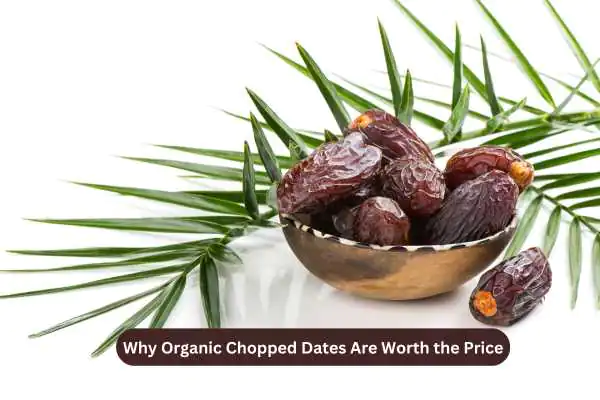
The question of why organic chopped dates are worth the price is one that many home bakers and commercial food producers face when balancing quality against a strict budget. While it is tempting to view all dried fruits as equal, the reality is that the “organic” label represents a fundamental difference in how the fruit is grown, processed, and preserved for your kitchen.
For those managing high-volume production or a health-conscious household, the decision to buy wholesale organic chopped dates from Sahara Food EU is an investment in both safety and superior flavor. Beyond the immediate price tag lies a narrative of agricultural integrity and a significant difference in the chemical profile of the final product.
1. The Hidden Cost of Conventional Cultivation
To understand the value of organic chopped dates, one must first look at what is absent from them. Conventional date palms are frequently treated with synthetic pesticides and herbicides to maximize yield. Because dates have a sticky, porous exterior, these chemicals often penetrate the skin and remain present even after the drying process.
When dates are chopped, the surface area increases significantly. In conventional products, this exposes the consumer to any residual chemicals trapped within the fruit’s fibers. Organic certification ensures that no synthetic inputs were used, meaning your energy bars, granola, or morning porridge remain free from “chemical hitchhikers.”
2. Purity in Processing: No Sulfur, No Additives
A major factor in the price difference is the method of preservation. Conventional chopped dates are often treated with sulfur dioxide or coated in low-grade vegetable oils to prevent them from sticking together in the bag. These additives can leave a metallic aftertaste and may trigger sensitivities in certain individuals.
Organic chopped dates rely on natural methods. At Sahara Food EU, the dates are carefully dried to the perfect moisture level before being precisely diced. They are typically tossed in a light coating of organic rice flour to maintain their individual “diced” shape. This ensures that the only thing you taste is the deep, honey-like sweetness of the date itself, rather than a cocktail of preservatives.
3. Nutrient Density and Soil Health
Plants are only as healthy as the soil they grow in. Organic farming prioritizes soil mineral density through composting and natural fertilization. This doesn’t just benefit the environment; it directly impacts the nutritional profile of the fruit.
Organic dates often show higher concentrations of antioxidants and polyphenols compared to their conventional counterparts. These compounds are responsible for the fruit’s anti-inflammatory properties. When you pay a premium for organic, you are essentially buying a more “potent” version of the food—more minerals per gram and a higher concentration of the natural fibers that support digestive health.
4. Labor and Precision: The “Chopped” Advantage
The process of creating high-quality chopped dates is labor-intensive. Organic dates are notoriously difficult to process because they lack the chemical hardening agents used in factory-scale conventional farming. They are naturally softer and stickier.
Achieving a consistent, uniform dice without mashing the fruit requires specialized equipment and slower processing speeds. This precision is what makes organic chopped dates a “ready-to-use” luxury. By purchasing them pre-chopped, you save significant labor time in the kitchen, and because they are organic, you don’t have to worry about washing away pesticides—a task that is impossible once the fruit has been diced.
5. The Environmental and Ethical Lifecycle
The price of organic produce accounts for the “true cost” of farming. This includes:
-
Water Management: Organic palms are often grown using traditional, sustainable irrigation that doesn’t deplete local water tables.
-
Biodiversity: Organic groves support local insect and bird populations, which are often wiped out by conventional pesticide spraying.
-
Fairer Labor: Organic certifications often go hand-in-hand with better working conditions for the farmers who hand-harvest these fruits from the tops of towering palms.
Choosing organic is a vote for a food system that doesn’t externalize its costs onto the planet.
6. Culinary Performance: Flavor and Texture
From a purely culinary perspective, organic dates win on “mouthfeel.” Conventional dates can sometimes feel “plasticky” or overly tough due to accelerated drying and chemical treatments. Organic chopped dates retain a jammy, caramel-like interior that melts beautifully into muffins, breads, and sauces.
Because they haven’t been treated with synthetic sweeteners, their sweetness is complex rather than cloying. They provide a nuanced “dark sugar” profile that mimics molasses or brown sugar, adding a professional layer of flavor to even the simplest recipes.
Final Verdict
While the upfront cost of organic chopped dates may be higher, the value is returned through the absence of toxins, the richness of nutrients, and the time saved in the kitchen. For the conscious consumer and the professional chef alike, the difference is noticeable from the first bite.
At Sahara Food EU, we bridge the gap between quality and accessibility. By sourcing the finest organic dates and processing them with care, we ensure that every bag of chopped dates you receive is a testament to what real, honest food should taste like.