
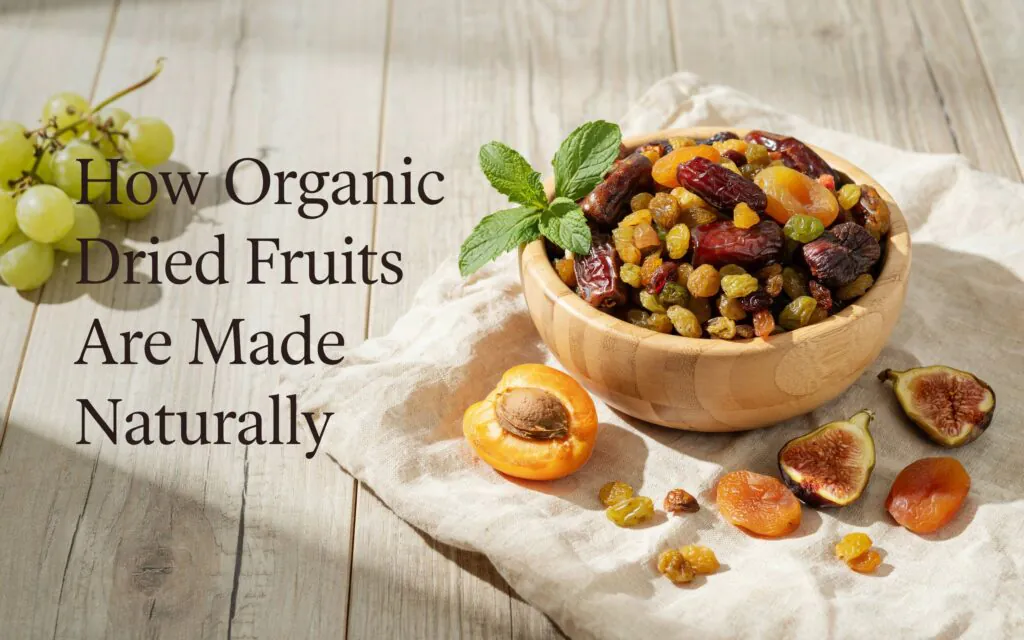
Learning how organic dried fruits are made naturally reveals the perfect balance between traditional farming heritage and modern quality control. This clean preservation process locks in essential vitamins and rich flavors without relying on synthetic chemicals or artificial additives.
At Sahara Food EU, we ensure that every batch of fruit undergoes a transparent transformation from orchard to package. For businesses looking to innovate their product lines with healthy, natural sweeteners, you can also buy wholesale dried fruits directly from our certified inventory to experience the ultimate convenience of naturally processed fruit ingredients.
1. Ethical Harvesting at Peak Ripeness
The production of high-quality organic dried fruit begins long before any drying takes place. It starts in certified organic orchards where fruits grow without synthetic pesticides, herbicides, or artificial fertilizers.
Farmers monitor the crops daily to harvest the fruit at its exact peak ripeness. This timing is vital because fruits left to ripen fully on the tree or vine develop their maximum sugar concentrations naturally. This natural sweetness eliminates any need to inject or coat the final dried product with refined sugar syrups later in the manufacturing process.
2. Rigid Inspection and Natural Cleansing
Once gathered, the fresh harvest travels to a specialized processing facility that strictly adheres to international organic certification standards.
-
Hand Selection: Workers carefully sort through the incoming fruit to remove any bruised, damaged, or under-ripened pieces.
-
Pure Water Washing: The chosen fruits undergo a thorough wash using pure water. Because the crops are organic, there is no need for chemical detergents or chlorine baths to strip away heavy synthetic pesticide residues.
Depending on the specific fruit variety, the produce is either left whole (like grapes for raisins or small figs) or sliced and pitted (like apricots, mangos, and dates) to expose the inner flesh and optimize the drying surface area.
3. The Art of Natural Dehydration
Dehydration is the core mechanism of making dried fruit. By reducing the moisture content to a precise level, the water activity drops significantly, preventing the growth of spoilage-causing bacteria, molds, and yeasts.
Organic production relies heavily on two clean, chemical-free methods to achieve this:
A. Sun Drying
This is the ancient, time-tested approach used widely for Mediterranean and desert fruits like dates, figs, and specific varieties of raisins. The prepared fruit is laid out on large, clean drying trays exposed directly to the sun. Over several days, the ambient solar heat gently evaporates the moisture while circulating warm air moves the water vapor away. This slow process allows the sugars within the fruit to caramelize slightly, giving sun-dried fruits their distinct, deep flavor profiles and chewy textures.
B. Warm Air Dehydration
To maintain strict hygiene levels and manage large-scale demands, modern organic facilities often use temperature-controlled dehydrators. These large chambers use fans to circulate warm, dry air gently across the fruit trays. The temperature is strictly maintained at a moderate level—typically between 45°C and 60°C. Keeping the heat low ensures that essential heat-sensitive nutrients, such as Vitamin C and active enzymes, are preserved rather than destroyed by excessive heat.
4. The Zero-Chemical Rule: Avoiding Sulfites
The most significant difference between conventional and organic dried fruit lies in what happens during the drying process.
Conventional dried fruits are almost always treated with sulfur dioxide (sulfites). This chemical preservative acts as a bleaching agent to preserve bright, artificial colors (making dried apricots look bright orange instead of their natural brown) and artificially extends shelf life.
Why Organic Looks Different: Organic dried fruits are completely free from sulfur dioxide and other synthetic preservatives. Without artificial color fixatives, organic fruits oxidize naturally when exposed to air and heat. This turns them a darker, rich brown color. This visual difference is the ultimate proof of a clean, unadulterated product that is safer for consumption, especially for individuals sensitive or allergic to sulfites.
5. Sorting, Quality Control, and Moisture Balancing
After the drying phase is complete, the fruits do not go straight into bags. They enter a conditioning phase where they sit in closed, clean bins for several days. This allows any remaining internal moisture to distribute evenly across the entire batch, ensuring that no individual pieces remain too damp (which causes mold) or too dry (which makes them unpleasantly hard).
The batch then passes through a final round of rigorous quality control checks:
-
Metal Detection & X-Ray: Scans ensure no fragments from farm tools or stray pits made it through.
-
Moisture Analytics: Technicians measure exact moisture percentages to verify the shelf stability of the product.
-
Final Grading: Sorting by size and appearance guarantees consistency for commercial use.
6. Sustainable Protective Packaging
The final step is sealing the dried fruit into high-barrier packaging. Because no chemical preservatives are used, the packaging must do all the heavy lifting to keep oxygen and external moisture out. Facilities often use a process called modified atmosphere packaging (MAP), where food-safe nitrogen gas gently flushes oxygen out of the bag before sealing. This completely natural technique prevents oxidation and staves off spoilage, keeping the fruit perfectly fresh, jammy, and nutritious from our warehouse straight to your kitchen.