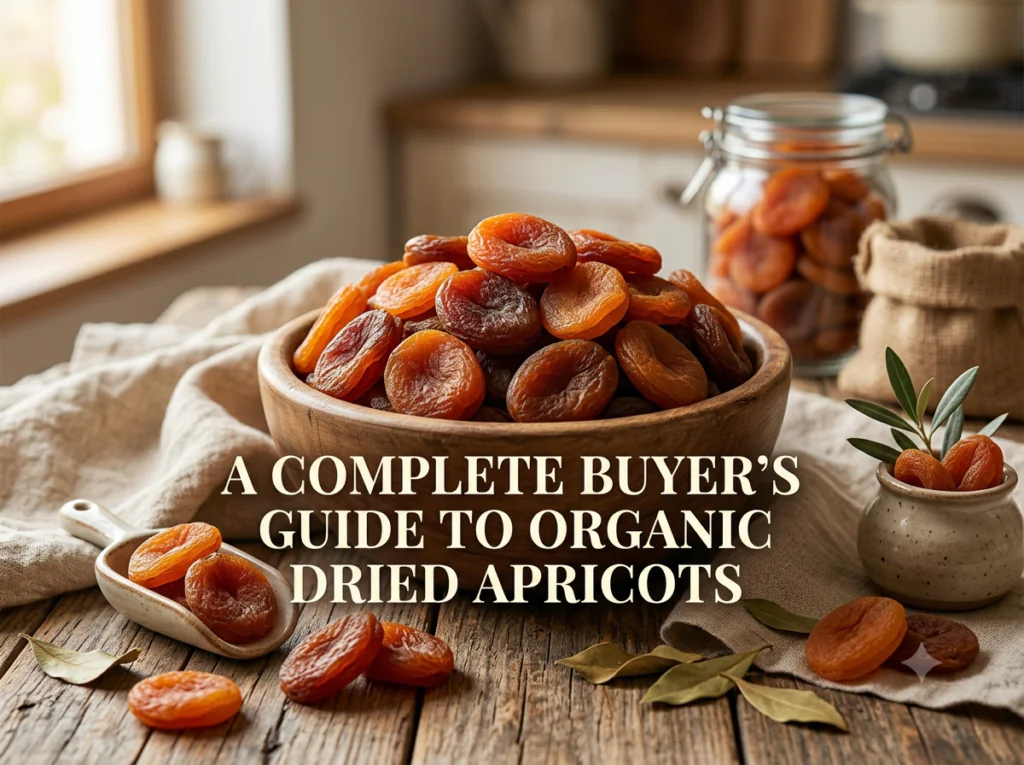
Finding a definitive buyer’s guide to organic dried apricots is essential if you want to navigate the wholesale market and select fruits that are completely free from chemical intervention. These nutritious, sun-ripened stone fruits are a favorite across Europe, but there is a major difference between a truly pure product and a conventional retail alternative.
When businesses and conscious consumers look to buy Organic Dried Apricots, they often face a confusing array of options regarding color, origin, moisture levels, and grading. At Sahara Food EU, we believe in complete transparency, which is why this comprehensive guide will give you the knowledge needed to distinguish premium, nutrient-dense organic apricots from low-grade alternatives.
1. The Color Truth: Why Real Organic Apricots are Brown
The single most important lesson in buying organic dried apricots is understanding their color.
-
Conventional Apricots (Bright Orange): If you see a dried apricot that is neon orange or bright gold, it has been treated with Sulfur Dioxide ($SO_2$). This chemical preservative is sprayed onto the fruit to prevent natural oxidation, preserve an artificial color, and extend shelf life artificially. For sensitive individuals, sulfur residues can trigger asthmatic reactions and digestive issues.
-
Organic Apricots (Dark Brown to Amber): True organic apricots are completely unsulphured. When harvested and laid out to dry naturally under the sun, the fruit oxidizes—just like an apple slice left on a counter. This natural browning produces a deep amber or dark brown color.
Don’t let bright colors fool you. In the world of organic dried fruits, dark brown is the ultimate badge of purity, indicating a rich, uncompromised, caramel-like sweetness.
2. Global Origins: Sourcing the Best Varieties
Geography plays a major role in the flavor, size, and fleshiness of the fruit. When inspecting wholesale batches, pay close attention to the country of origin:
Turkey (The Malatya Region)
Turkey is the undisputed global hub for premium dried apricots, particularly the Malatya province. The unique microclimate, soil composition, and high altitude produce exceptionally sweet, plump apricots with high Brix (natural sugar) levels. These are typically halved and pitted before drying, offering a uniform shape ideal for gourmet manufacturing, retail packing, and premium snacking mixes.
Central Asia (Uzbekistan & Iran)
Central Asian regions produce smaller, intensely flavored varieties. Some of these are sun-dried whole with the stone intact, which protects the inner flesh and yields a slightly chewier, more rustic product popular in traditional culinary applications.
3. Understanding Sizing and Grading
In the B2B wholesale market, dried apricots are systematically categorized by size, typically ranging from Size 1 to Size 8 (or categorized from Extra Jumbo to Choice).
-
Size 1 (Jumbo/Extra Jumbo): The largest fruits. These have the thickest flesh, hold moisture exceptionally well, and are highly sought after for premium retail snacking lines.
-
Sizes 4 to 6 (Medium): The workhorses of the food industry. They balance cost-efficiency with great flavor, making them ideal for cutting down into muesli mixes, energy bars, and granola blends.
-
Sizes 7 and 8 (Small/Industrial): These are smaller or irregularly shaped fruits, often utilized by industrial bakeries, jam manufacturers, and sauce makers where appearance doesn’t matter because the fruit will be pureed or heavily processed.
4. Moisture Content and Texture Balance
The moisture percentage of a dried apricot directly impacts its shelf life, mouthfeel, and weight.
Premium unsulphured organic apricots typically maintain a moisture level between 20% and 24%. If the moisture levels drop below 18%, the apricot becomes tough, leathery, and difficult to chew. Conversely, if moisture exceeds 25% without chemical preservatives like sulfur dioxide, the fruit faces a high risk of mold development during transit and storage.
When sourcing in bulk, ensure your supplier utilizes climate-controlled storage and strict optical sorting to guarantee consistent humidity levels across every pallet.
5. Nutritional Check: What Premium Batches Deliver
A high-quality batch of organic dried apricots isn’t just a sweetener—it is a functional ingredient packed with health benefits. Because the dehydration process removes water, the key nutrients become highly concentrated by weight:
-
Vitamin A (Beta-Carotene): Essential for maintaining eye health, vision, and skin cell regeneration.
-
Potassium: A critical electrolyte that regulates fluid balance, supports nerve signals, and promotes cardiovascular health by managing blood pressure.
-
Iron and Copper: A natural botanical combination that assists the body in hemoglobin production, aiding in the prevention of anemia.
-
Dietary Fiber: High concentrations of insoluble fiber and sorbitol promote excellent digestive health and natural regularity.
Conclusion: Sourcing Safely with Sahara Food EU
Navigating the wholesale market for organic dried fruits requires an eye for detail. By prioritizing dark brown, unsulphured varieties from reputable regions like Malatya, and checking for precise moisture controls, you protect your customers and enhance your product line.
At Sahara Food EU, we specialize in sourcing and distributing certified organic, preservative-free dried apricots that meet the strictest European safety standards. Whether you are looking for jumbo retail packs or industrial quantities for clean-label manufacturing, we deliver uncompromised quality directly to your facility.