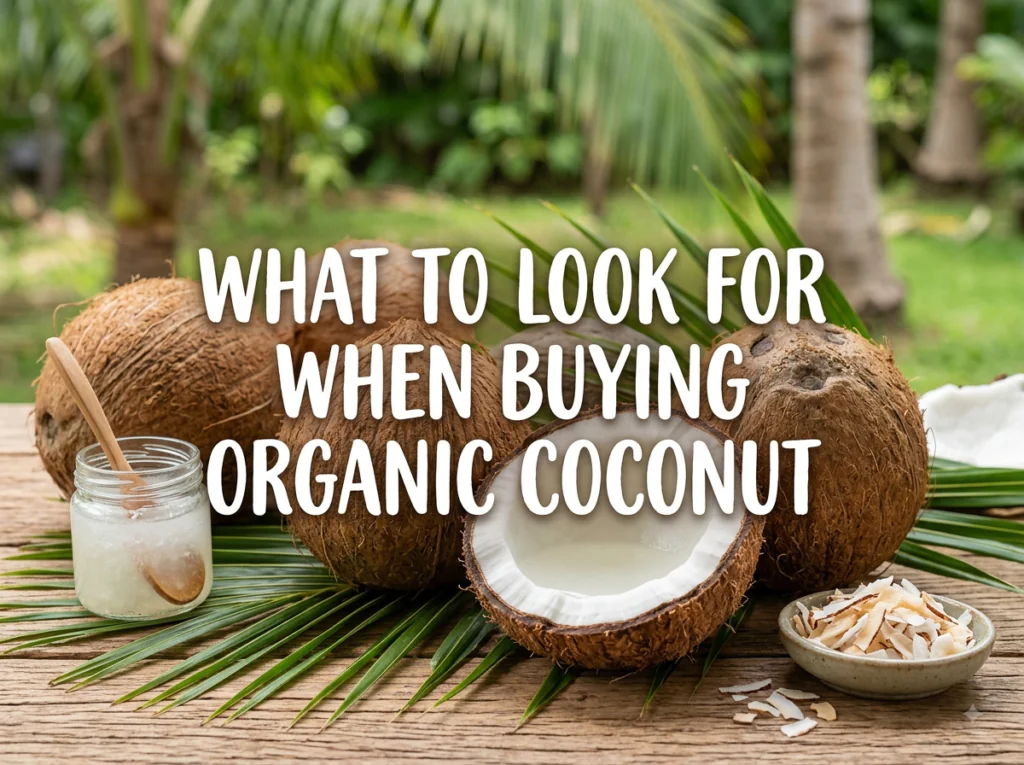
Knowing exactly what to look for when buying organic coconut is the difference between securing a premium, nutrient-rich ingredient and accidentally purchasing a chemical-laden product. With the global demand for clean labels steadily rising, understanding the specific quality markers of certified organic coconut ensures your culinary or commercial projects perform exactly as intended.
When food manufacturers, pastry chefs, and health-conscious businesses across Europe seek clean, single-origin sourcing, they opt to buy wholesale Organic Coconut in bulk through trusted distributors like Sahara Food EU. Sourcing properly certified organic coconut guarantees that the raw ingredient has been cultivated and processed completely free from synthetic chemical fumigants, sulfur bleaching agents, or hidden artificial preservatives.
1. Official Organic Certification and Verification
The most absolute baseline indicator of a genuine product is an authentic, recognized certification seal. In the European Union, look for the Euro-leaf organic logo alongside a clear tracking code indicating the control body.
True organic coconut is grown without chemical pesticides or synthetic fertilizers. Furthermore, certification ensures the processing facility adheres to strict cross-contamination protocols. If a supplier cannot immediately produce a valid, unexpired organic certificate mapping back to the processing source, the structural integrity of the organic claim is compromised.
2. Total Absence of Sulfur Dioxide ($SO_2$)
One of the most critical elements to look for when sourcing shredded, flaked, or desiccated coconut is whether the product has been treated with sulfur dioxide.
-
The Conventional Shortcut: Conventional processing facilities heavily rely on sulfur dioxide as a bleaching agent and preservative to keep the coconut meat bright white and unnaturally shelf-stable.
-
The Organic Standard: Certified organic coconut is explicitly prohibited from utilizing sulfur dioxide. True organic coconut will possess an authentic, slightly off-white, creamy tone.
-
Health and Allergen Risks: Sulfites are notorious for triggering respiratory issues, headaches, and digestive sensitivities in consumers. Sourcing organic preserves the natural color and ensures a completely allergen-safe profile for clean-label manufacturing.
3. Moisture Content Consistency: Desiccated vs. Moist
The moisture percentage of the coconut dictates both its culinary behavior and its natural shelf-life stability. Depending on your production needs, you must closely verify these numbers:
-
High-Fine Desiccated Coconut: Premium dried shredded coconut should maintain a low, uniform moisture level (typically under 3-4%). Excess residual moisture in dry storage invites premature mold growth and rancidity.
-
Flakes and Chips: These larger cuts should feel crisp or slightly chewy but never damp. A uniform, dry texture ensures the fats do not oxidize quickly, giving the product a natural, stable shelf life without synthetic additives.
4. Pure Ingredient Lists: No Added Sugars or Oils
A common pitfall when buying coconut products is overlooking hidden additives on the ingredient statement. Pure organic coconut requires exactly one ingredient: organic coconut.
Many conventional retail and commercial brands add refined sugar, high-fructose corn syrup, or propylene glycol (a moisture retainer) to sweeten the product or artificially enhance mouthfeel. True organic coconut relies strictly on its natural, subtle sweetness and clean medium-chain triglyceride (MCT) fats. Check the specifications carefully to ensure you are not paying for added fillers or industrial sweeteners.
5. Uncompromised Aroma and Flavor Profiles
High-quality organic coconut should smell and taste exactly like fresh coconut—clean, tropical, mildly sweet, and lightly nutty.
Because coconut contains high levels of healthy plant fats, it is highly susceptible to improper storage. If a sample exhibits a sour, chemical, soapy, or strictly bland aroma, it indicates that the fats have begun to oxidize or that the product was harvested from under-ripe nuts. A premium organic crop will always retain its natural aromatic oils through careful, low-temperature drying processes.
6. Proper Packaging and Oxygen Barriers
Because organic coconut lacks synthetic chemical preservatives, the protective packaging used during shipping and wholesale distribution is vital.
When buying in bulk, ensure the product is packed in multi-walled, food-grade paper bags with high-density poly-liners, or sealed oxygen-barrier bags. This shielding prevents environmental moisture and ambient humidity from seeping into the dry coconut, which would otherwise accelerate spoilage and compromise the crisp texture of flakes or the fine consistency of desiccated flour.
Conclusion
Evaluating what to look for when buying organic coconut requires looking past basic visual appeal and strictly checking certifications, processing methods, and ingredient purity. By insisting on sulfite-free, certified organic varieties that lack added sugars, you protect the health of your consumers and ensure your recipes retain an authentic, premium flavor profile.
At Sahara Food EU, we handle the strict verification processes for you, delivering top-tier, cleanly processed organic coconut directly to your business so you can focus on creating exceptional products.