
Learning how to store organic dried banana chips properly is the key to maintaining their signature crisp texture, natural sweetness, and nutritional profile over the long term. Unlike heavily processed snacks, organic banana chips contain no artificial preservatives or chemical stabilizers, meaning their shelf life depends entirely on environmental control.
When commercial bakeries, breakfast cereal producers, and health food retailers want to maintain strict quality standards, they choose to buy wholesale Organic Dried Banana Chips in Bulk from Sahara Food EU. Because these premium organic chips are dried naturally without the use of sulfur dioxide or heavy oil additives, implementing the correct storage methodology at home or in a commercial warehouse is critical to preventing staleness and extending shelf life.
The Four Environmental Enemies of Banana Chips
To store dried fruit successfully, you must protect it from four primary environmental catalysts that accelerate spoilage:
-
Moisture (Humidity): The ultimate enemy of any dehydrated snack. Dried banana chips are highly hygroscopic, meaning they easily absorb moisture from the surrounding air. Excess humidity destroys their crisp crunch, turning them rubbery or soggy, and creates a breeding ground for mold.
-
Oxygen: Exposure to open air triggers oxidation. For banana chips, this causes the natural fats to break down and turn rancid, resulting in an unpleasant, bitter aftertaste and a loss of nutritional value.
-
Heat: High temperatures cause the natural sugars within the fruit to sweat and break down, causing the chips to stick together in clumps and lose their distinct texture.
-
Direct Light: Ultraviolet (UV) light acts as a bleaching agent. Prolonged exposure fades the rich, natural golden color of the bananas and degrades valuable vitamins.
1. Choosing the Right Storage Container
The original bulk packaging used during transport is designed for shipping, not necessarily long-term access. Once a bulk box or sack is opened, transferring the chips to an airtight, rigid container is your first line of defense.
Glass Jars and Canisters
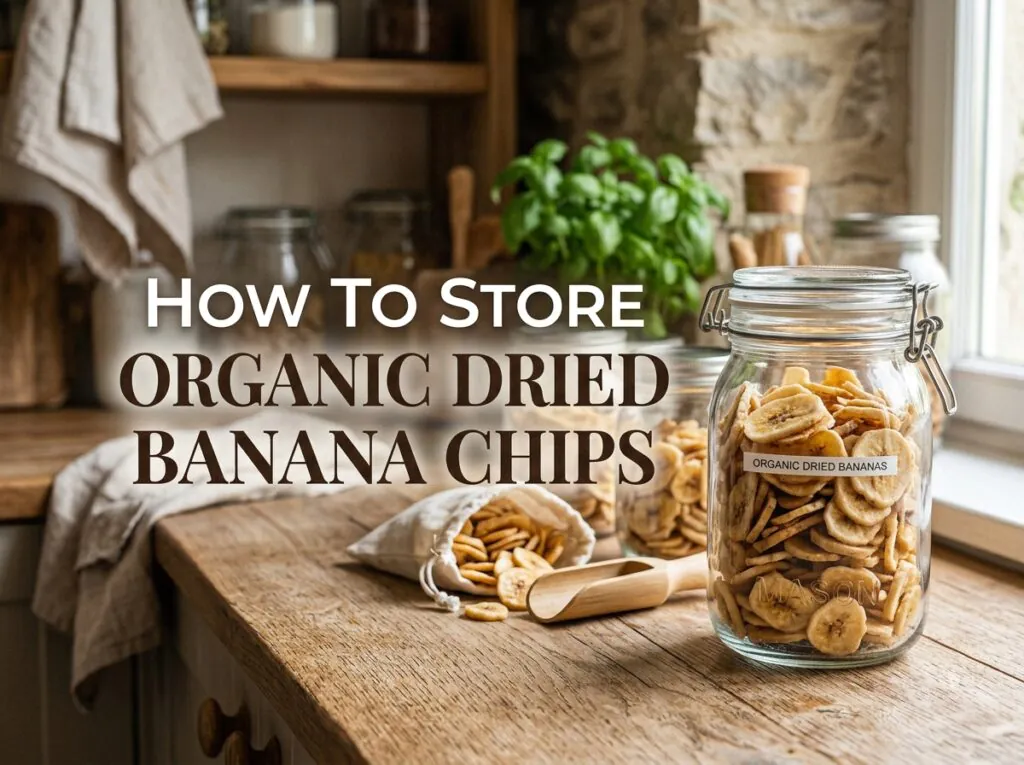
For smaller retail quantities or home kitchens, heavy-duty glass jars fitted with airtight silicone or rubber gaskets are ideal. Glass is entirely non-porous, meaning it completely blocks oxygen transmission and will not leach chemical odors into the fruit. If using clear glass, ensure it is stored inside a dark cupboard.
Food-Grade Mylar Bags
For medium-term storage, high-density Mylar pouches equipped with zip-locks or heat-sealed tops offer an exceptional barrier against both oxygen and light. Because Mylar is completely opaque, it eliminates the risks associated with UV light exposure.
Rigid Polyethylene Buckets
For wholesale volumes and large commercial kitchens, heavy-duty, food-grade plastic buckets featuring airtight, gamma-seal lids are mandatory. These protect the physical structure of the fragile banana slices from being crushed while keeping ambient humidity entirely out.
2. Temperature and Location Settings
Once sealed in the proper container, the physical location of your storage setup dictates how long the chips will remain fresh.
The Cool, Dark Pantry (Best for Daily Use)
The ideal storage temperature for organic dried banana chips is between 15°C and 20°C (60°F to 68°F). A climate-controlled pantry, root cellar, or dark stockroom is perfect. Keep containers away from heat-generating appliances like ovens, dishwashers, or sunny windows.
Refrigeration (Best for Humid Climates)
If you operate in a high-humidity environment or experience hot summer months, moving your airtight containers into the refrigerator is highly effective. The low temperature dramatically slows down natural degradation. Crucial Tip: Never open a cold container immediately after pulling it from the fridge; let it sit on the counter until it reaches room temperature to prevent condensation from forming on the inside of the jar.
Freezing (For Extended Shelf Life)
Can you freeze banana chips? Yes. If you have purchased bulk quantities that will not be used for six months or longer, deep freezing is an excellent option. Place the chips into heavy-duty freezer bags, press out all excess air, and seal. They can be stored frozen for up to two years without losing their crispness.
3. Commercial Warehousing and Quality Control
For distributors and food manufacturers managing large wholesale volumes, professional stock rotation and environmental monitoring are essential.
-
FIFO Protocol: Always practice the “First In, First Out” inventory system to guarantee that older stock is utilized before newer arrivals.
-
Pallet Management: Never store bulk boxes directly against concrete walls or directly on floors, as moisture can migrate through the surfaces. Keep inventory elevated on pallets in a well-ventilated warehouse.
-
Oxygen Absorbers: For long-term preservation in sealed bulk containers, inserting a small, food-safe oxygen absorber packet before sealing will eliminate any residual air, effectively stopping oxidation in its tracks.
Signs of Spoilage: What to Look For
Because organic banana chips lack chemical additives, you should inspect your stock periodically. Discard the batch if you observe any of the following signs:
-
A Sour or Musty Aroma: Fresh banana chips should smell cleanly of sweet banana fruit. A sharp, oil-like, or paint-like odor indicates that the natural fats have oxidized and gone rancid.
-
Clumping and Wetness: If the chips are sticking together in a solid mass or feel damp to the touch, moisture has penetrated the container.
-
Visible Mold: Any white, green, or dark fuzzy spots mean that mold spores have developed due to humidity exposure.
Conclusion
Mastering how to store organic dried banana chips properly requires minimal effort but yields massive benefits. By keeping your chips in airtight containers, shielding them from light, and maintaining a cool, dry environment, you protect your investment and preserve a delicious, high-energy ingredient.
At Sahara Food EU, we supply premium, unadulterated organic dried banana chips directly to businesses and kitchens across Europe, giving you the perfect foundational ingredient to serve, bake, or package with complete confidence.