
Choosing between organic dried apples vs conventional dried apples is one of the most important decisions you can make when selecting wholesome ingredients for your recipes, snack lines, or retail shelves. While both versions offer a convenient, shelf-stable way to enjoy the classic orchard fruit, they are produced using completely different agricultural and processing standards that directly impact their purity, taste, and nutritional value.
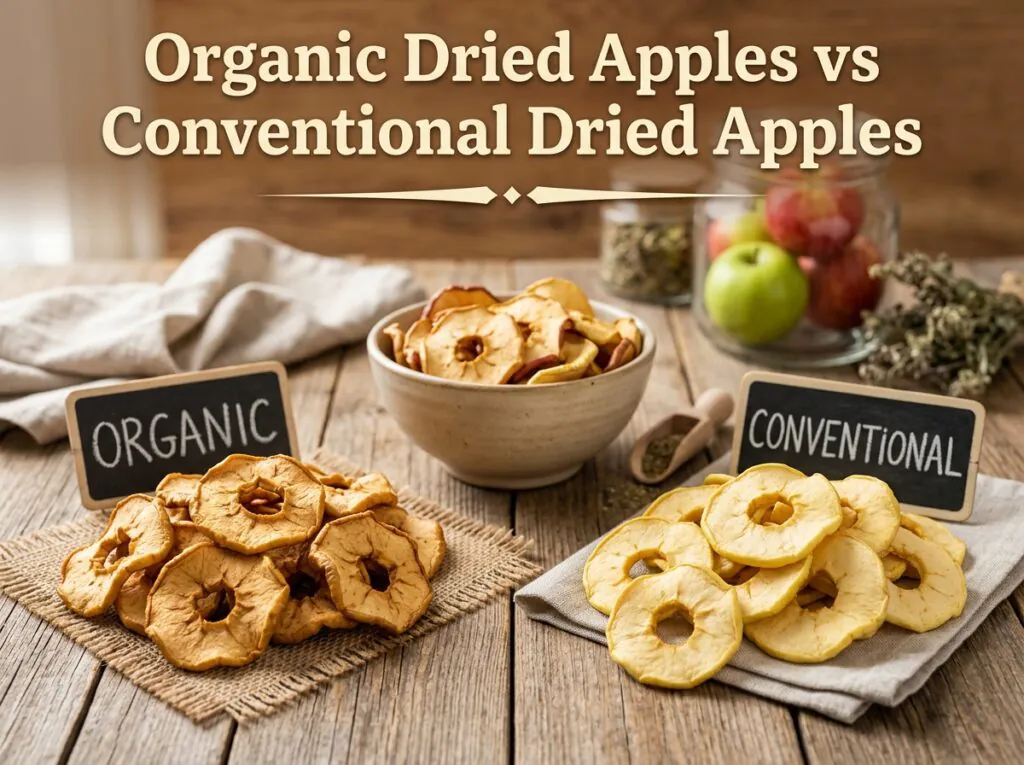
If you are a food manufacturer, bakery, or retailer looking to elevate your product quality and meet the growing demand for clean-label ingredients across Europe, the choice to buy wholesale Organic Dried Apples in bulk is a proven way to align with health-conscious consumer expectations. In this detailed comparison, we will break down the essential differences between organic and conventional dried apples across four main areas: chemical residues, preservation methods, flavor profiles, and environmental sustainability.
1. Pesticide Residues and the “Dirty Dozen”
The most critical distinction between organic and conventional apples starts in the orchard. Year after year, fresh apples consistently rank near the very top of global pesticide contamination lists, such as the Environmental Working Group’s “Dirty Dozen”.
In conventional farming, apple trees are subjected to repeated synthetic pesticide, herbicide, and fungicide sprayings throughout their growth cycles. Because the drying process removes up to 90% of the fruit’s natural water content, any chemical residues present on the skin and flesh of the apple become highly concentrated in the final dried product.
By choosing certified organic dried apples, you ensure the fruit is grown using strictly natural pest-control methods. This guarantees a finished product that is free from synthetic chemical residues, protecting both your consumers and your brand’s integrity.
2. Sulfites and Chemical Preservatives
When you look at conventional dried apples, they often retain an unnaturally bright, off-white, or golden-yellow color. This artificial appearance is achieved by treating the freshly cut apple slices with sulfur dioxide ($SO_2$) or other synthetic sulfites before the dehydration process.
While sulfites prevent natural oxidation (browning) and artificially extend shelf life, they carry notable downsides:
-
Allergen Risks: Sulfites are a known allergen and can trigger severe respiratory reactions, headaches, and digestive distress in sensitive individuals.
-
Altered Taste: Chemically preserved apples can carry a faint, metallic, or chemical aftertaste.
Organic dried apples, on the other hand, are processed without any synthetic preservatives or sulfur dioxide. Instead, they are allowed to dry naturally, which causes them to take on a beautiful, rustic, light-brown hue. This natural browning is proof of a clean, chemical-free drying process that relies solely on heat and air flow, resulting in a completely clean label.
3. Flavor Concentration and Nutritional Value
Many culinary professionals and bakers agree that organic dried apples possess a far more intense, authentic “apple” flavor than their conventional counterparts. There is a fascinating scientific reason behind this.
In conventional agriculture, synthetic fertilizers force apple trees to absorb water rapidly, resulting in larger but more water-bloated fruit. When these apples are dried, the lack of concentrated natural sugars and solids can leave them tasting somewhat bland or paper-like.
Because organic apple trees must rely on natural soil biology, they grow at a steady, balanced pace. This produces smaller, denser fruit packed with natural sugars, organic acids, and active phytonutrients. When dried, these compounds concentrate beautifully, delivering a deep, jammy, and naturally sweet-tart flavor that stands out in granolas, trail mixes, and baked goods. Organic apples have also been shown to retain higher levels of health-supporting antioxidants, such as polyphenols, compared to intensively farmed conventional varieties.
4. Environmental and Ecological Impact
Your choice of ingredient ripple effects far beyond the kitchen. The agricultural methods used to produce conventional dried apples rely heavily on synthetic chemical inputs that can degrade soil health over time, disrupt local pollinator populations, and lead to agricultural runoff that contaminates nearby waterways.
Organic orchards work in harmony with nature. By utilizing organic compost, cover crops, and natural biodiversity to manage pests, organic farmers actively rebuild topsoil, sequester carbon, and preserve local ecosystems. Offering organic dried apples allows your business to actively support sustainable agricultural systems that protect the planet for future generations.
Direct Comparison: At a Glance
| Feature | Organic Dried Apples | Conventional Dried Apples |
| Pesticide Exposure | Grown without synthetic chemicals or sprays | Frequently carry concentrated pesticide residues |
| Preservatives | 100% Sulfite-free; naturally air-dried | Commonly treated with Sulfur Dioxide ($SO_2$) |
| Color & Appearance | Natural, rustic golden-brown | Artificially bright white or yellow |
| Flavor Profile | Concentrated, rich, and naturally sweet-tart | Can taste diluted, bland, or chemically assisted |
| Soil & Nature Impact | Enhances biodiversity and soil health | High chemical runoff and soil depletion |
Conclusion
While conventional dried apples might seem like a budget-friendly option at first glance, they carry hidden costs in the form of chemical residues, artificial preservatives, and diluted flavor profiles. Organic dried apples deliver a superior sensory experience with clean, concentrated flavors, zero chemical additives, and a farming footprint you can be proud to support.
At Sahara Food EU, we specialize in sourcing and supplying the highest quality certified organic ingredients. By choosing our premium organic dried apples for your production lines or retail store, you are choosing a healthier, cleaner, and more sustainable future.