
Deciding between organic dried mango vs fresh mango comes down to understanding how the drying process transforms this tropical favorite’s nutritional layout, physical footprint, and culinary utility. Both options deliver an exceptional dose of vitamins and natural sugars, but they serve distinctly different roles depending on your lifestyle, storage limits, and nutritional goals.
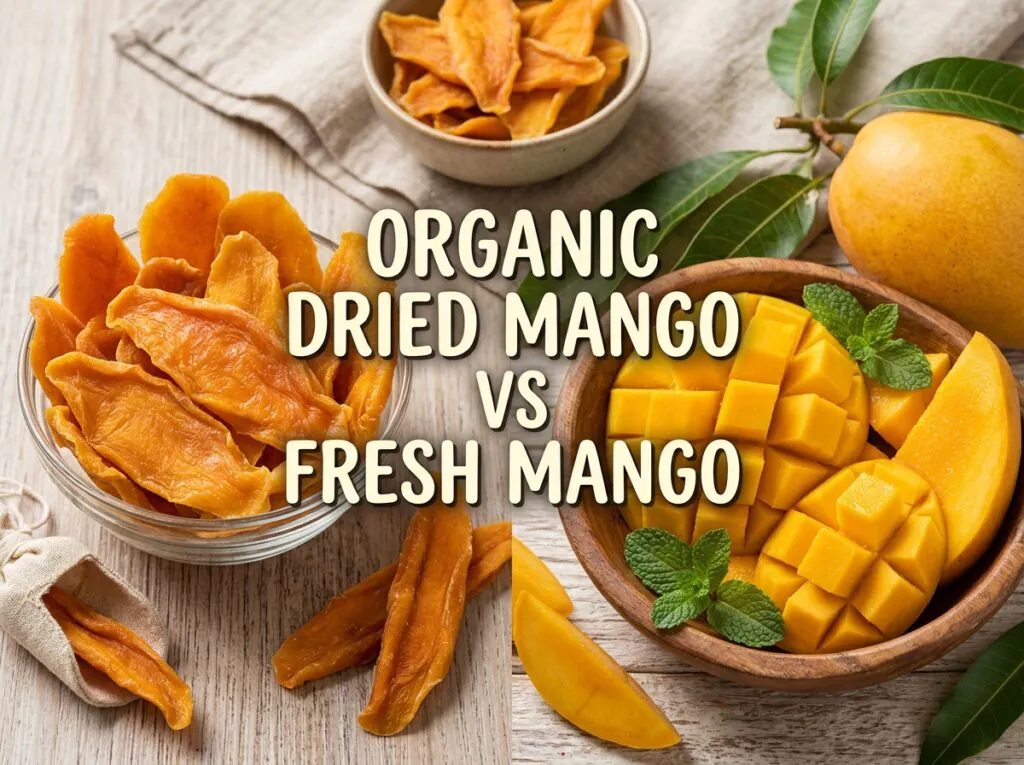
If you run a food manufacturing brand, a clean-label bakery, or a healthy retail outlet, understanding these differences is key to optimizing your product lines. When looking to source high-quality ingredients, many businesses choose to buy wholesale Organic Dried Mango in bulk from Sahara Food EU to guarantee a year-round, preservative-free supply of premium tropical fruit. Let’s break down how these two forms of mango stack up against each other.
1. Concentration of Nutrients and Calories
The fundamental difference between organic dried mango and its fresh counterpart is moisture content. Fresh mango is composed of roughly 84% water. When that water is gently removed through low-temperature drying, the remaining nutrients become highly concentrated.
-
Calorie Density: Because the water is gone, dried mango is much more calorically dense. A 100-gram serving of fresh mango contains about 60 calories, whereas the same weight of organic dried mango contains roughly 310 to 340 calories.
-
Vitamin Retention: Fresh mango is superior in delicate, water-soluble vitamins—particularly Vitamin C, which degrades slightly when exposed to heat and air during drying. However, fat-soluble vitamins and antioxidants, such as Vitamin A (beta-carotene) and Vitamin E, remain highly stable and concentrated in the dried version.
-
Minerals: Important minerals like potassium, magnesium, and iron do not evaporate with water. Gram for gram, organic dried mango offers a much higher concentration of these essential minerals than fresh slices.
2. Digestive Wellness and Dietary Fiber
Both fresh and organic dried mangoes are excellent sources of dietary fiber, which is crucial for maintaining digestive regularity and feeding beneficial gut microbes. However, their physical volumes affect how they interact with your digestive tract.
Fresh mango provides a high volume of water alongside fiber, which is highly hydrating and filling. On the other hand, dried mango offers concentrated insoluble fiber. This concentrated fiber acts as a highly efficient digestive aid, helping to sweep the digestive tract and prevent occasional constipation. For those who struggle to meet their daily fiber targets, a small handful of chewy dried mango slices is a highly efficient way to close the gap without feeling overly bloated from water volume.
3. Storage, Shelf Life, and Food Waste
One of the most significant arguments in the debate of dried vs. fresh is sustainability and shelf life.
Fresh mangoes have a notoriously short window of perfect ripeness. They damage easily during transit, spoil within days, and require strict temperature-controlled storage. This often leads to high rates of domestic and commercial food waste.
Organic dried mango solves this logistical headache completely. When stored in a cool, dry place, premium dried mango retains its flavor, texture, and nutritional value for up to two years without refrigeration. This makes it the ultimate pantry staple for busy households, hikers, and food manufacturers who need a stable, resilient ingredient that won’t spoil overnight.
4. The Organic Clean-Label Difference
When comparing dried mango to fresh, the quality of the drying process matters immensely. Many conventional dried mangoes on supermarket shelves are treated with sulfur dioxide (to preserve a bright orange color) and coated in added refined sugar syrups to increase weight.
Opting for certified organic dried mango ensures you avoid these unnecessary additives. High-quality organic dried mango contains exactly one ingredient: 100% organic mango. The fruit is harvested at peak ripeness when its natural sugar levels are highest, then sliced and dried without any chemical preservatives, artificial colors, or added sweeteners. This yields a clean, deeply flavorful, and incredibly chewy snack that aligns perfectly with a wholesome, whole-food diet.
5. Portability and Lifestyle Integration
Your daily routine often dictates which version of the fruit is truly “better” for you:
-
The Fresh Advantage: Fresh mango is unbeatable as a hydrating, refreshing summer snack, a juicy addition to fresh salsas, or a base for cold morning smoothies.
-
The Dried Advantage: Organic dried mango is the champion of on-the-go convenience. It is lightweight, requires no peeling or slicing, leaves no sticky residue, and can be tossed into a gym bag, office drawer, or travel backpack without fear of bruising. It is also highly versatile as an ingredient—easily chopped and folded into granola mixes, trail mixes, oatmeal, or baked goods.
Comparison Table: At a Glance
| Feature | Fresh Mango | Organic Dried Mango (No Added Sugar) |
| Water Content | Very High (~84%) | Low (~10-15%) |
| Calorie & Nutrient Density | Low | Very High |
| Shelf Life | 3–7 Days | Up to 2 Years |
| Portability | Requires prep, easily bruised | Travel-friendly, lightweight |
| Best For | Immediate consumption, fresh salsas | On-the-go snacking, baking, long-term storage |
Conclusion: Which Is Better?
There is no single winner in the matchup of organic dried mango vs. fresh mango—both have distinct strengths. If you want a hydrating, vitamin-C-rich snack to eat immediately, fresh mango is fantastic. However, if you value long shelf life, nutrient density, easy portability, and a versatile baking ingredient that won’t spoil, organic dried mango is vastly superior.
For businesses, food producers, and wellness brands looking to deliver clean, highly stable tropical nutrition, premium dried mango is the clear operational choice. Explore the wholesale catalog at Sahara Food EU to elevate your recipes and product selections with pure, certified organic ingredients.