
Navigating the choice between organic dates vs conventional dates comes down to understanding how farming practices impact purity, nutritional value, and overall flavor. Whether you are stocking a commercial kitchen, sourcing raw ingredients for food manufacturing, or choosing everyday whole foods for your family, knowing which variety best aligns with your standards is essential.
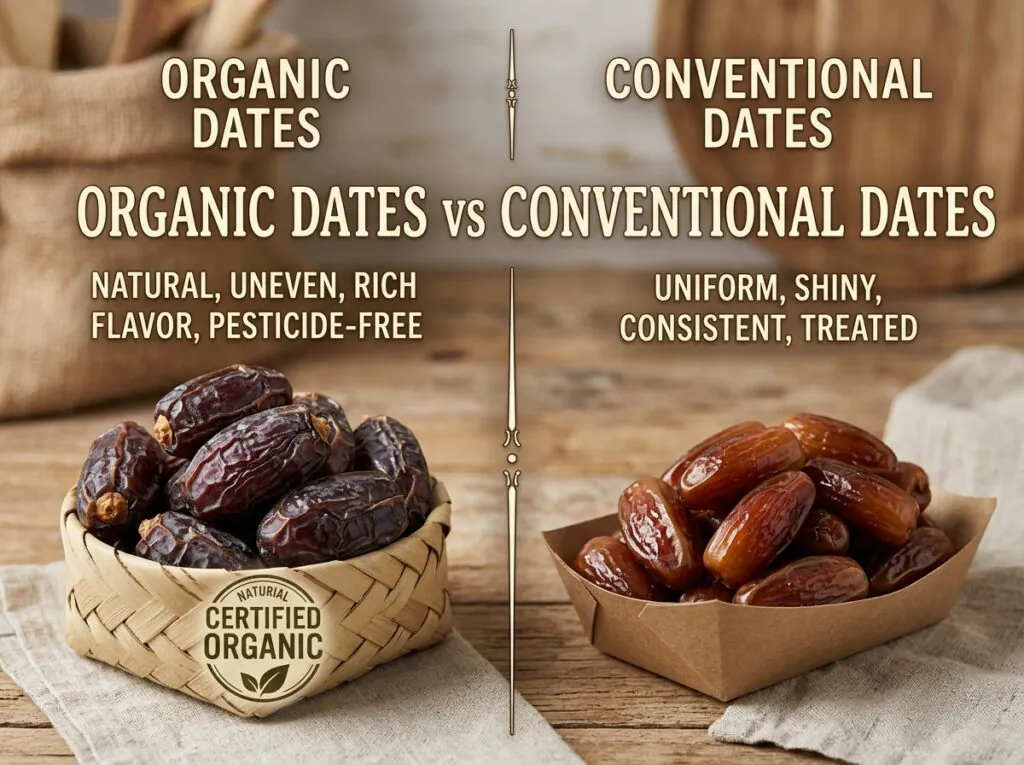
At Sahara Food EU, we supply both options to suit diverse global market demands, enabling businesses across Europe to source wholesale dates in bulk with complete supply chain transparency. To make an informed buying decision, it helps to examine how organic and conventional dates differ in cultivation, chemical exposure, nutritional profile, taste, and environmental sustainability.
1. Cultivation Methods: Soil Health and Farming Philosophy
The root difference between organic and conventional dates lies in how date palms are cultivated and nourished in the grove.
-
Organic Date Farming: Organic agriculture relies on natural ecosystems to nourish the palm trees. Farmers use compost, cover crops, and organic soil amendments to build a rich microbial ecosystem in the ground. Pest control is managed through integrated methods, such as introducing beneficial insects, utilizing sticky traps, and planting companion crops like citrus or aromatic plants around the palm grove to naturally deter invasive pests.
-
Conventional Date Farming: Conventional farming prioritizes maximum yield, crop uniformity, and protection against high pest loads in harsh desert climates. Farmers typically utilize synthetic nitrogen-based fertilizers to accelerate growth, along with targeted synthetic insecticides and fungicides to safeguard massive harvests from fruit rot, date mites, and beetles.
While conventional methods produce larger volume yields per acre, organic practices focus on long-term soil vitality, which directly influences the chemical composition of the harvested fruit.
2. Chemical Residues and Food Safety
Because dates are harvested as whole fruits and often consumed without peeling, chemical exposure during the growing and drying phases is a major consideration for health-conscious buyers.
-
Synthetic Pesticides: Conventional dates may retain trace levels of synthetic pesticides or insecticides applied during the growing cycle. While regulatory bodies set maximum residue limits (MRLs) to ensure safety, consumers and clean-label food brands increasingly seek to eliminate chemical exposure altogether. Organic dates are strictly grown without synthetic pesticides, herbicides, or chemical fertilizers, drastically reducing exposure to synthetic compounds.
-
Sulfites and Preservatives: Conventional dried fruits are sometimes treated with sulfur dioxide or preservatives during processing to extend shelf life or preserve bright pigmentation. Certified organic dates are processed without synthetic preservatives or sulfites, preserving the fruit in its natural, sun-cured state.
3. Flavor, Texture, and Culinary Performance
Both organic and conventional dates offer rich sweetness, but their texture and taste profiles can differ subtle ways based on how they are grown and dried.
-
Organic Dates: Because organic date palms grow at a natural pace without synthetic growth stimulants, the fruit develops a complex caramel note with deep, honeyed undertones. Organic Medjool, Deglet Nour, or Ajwa dates tend to have a thick, jammy flesh and a rich, unrefined finish that works exceptionally well in gourmet pastries, raw energy bars, and high-end retail packaging.
-
Conventional Dates: Conventional dates deliver a consistent, sweet taste profile across large batches. They are reliable, highly accessible, and ideal for commercial food production where cost efficiency and high-volume consistency are the primary priorities.
4. Nutritional Profile and Antioxidant Density
Dates are naturally packed with dietary fiber, potassium, magnesium, copper, manganese, and vitamin B6. However, the way a fruit is grown can influence its secondary metabolite production—specifically antioxidants.
Plants produce polyphenols and flavonoids as part of their natural defense mechanism against environmental stressors and wild insects. Because organic date palms must rely on their own natural immune systems rather than chemical sprays, research suggests they often contain higher concentrations of protective antioxidants.
Both types provide an excellent low-glycemic natural energy source, making them a superior alternative to refined sugar in baking, smooth blending, and snacking.
5. Environmental Sustainability and Ecosystem Health
For many buyers, the choice between organic and conventional dates extends beyond personal health to ecological stewardship.
-
Water Protection: Organic farming eliminates chemical runoff, preventing synthetic pesticides and synthetic nitrogen from leaching into groundwater reserves in fragile desert ecosystems.
-
Biodiversity: Organic groves support local fauna, wild birds, and soil organisms, maintaining natural ecological balances.
-
Soil Regeneration: Organic compost and natural mulching build organic matter in the soil, improving water retention in arid regions and combating desertification.
Organic vs. Conventional Dates: Comparison Overview
| Feature | Organic Dates | Conventional Dates |
| Synthetic Pesticides | Strictly prohibited | Permitted within legal residue limits |
| Soil Enrichment | Organic compost & biological fertilizers | Synthetic nitrogen & mineral fertilizers |
| Preservatives / Sulfites | Free from chemical preservatives | May contain standard food-grade preservers |
| Antioxidant Content | Higher concentration of polyphenols | Standard natural nutrient levels |
| Price Point | Premium investment due to manual labor | Cost-effective for high-volume needs |
| Best For | Clean-label products & health-focused diets | Large-scale traditional food production |
The Verdict: Which Should You Buy?
Your choice ultimately depends on your product goals, budget, and customer preferences:
-
Choose Organic Dates if: You are producing clean-label food items, manufacturing organic-certified energy bars or date pastes, cater to health-conscious retail customers, or prioritize zero chemical pesticide exposure and sustainable desert farming.
-
Choose Conventional Dates if: You need a cost-effective, dependable natural sweetener in bulk for large-scale bakery operations, food service applications, or price-sensitive consumer markets where standard food safety regulations are fully sufficient.
Partner with Sahara Food EU for Bulk Dates
Whether you choose certified organic dates or premium conventional varieties, sourcing high-grade fruit is essential for maintaining consistent taste and product quality. Sahara Food EU delivers fully traceable, ethically harvested dates in a wide range of varieties—including Medjool, Deglet Nour, and pitted dates—packaged to serve wholesale distributors, food manufacturers, and retailers across Europe.
Explore our full inventory today to discover the ideal date options for your enterprise.