
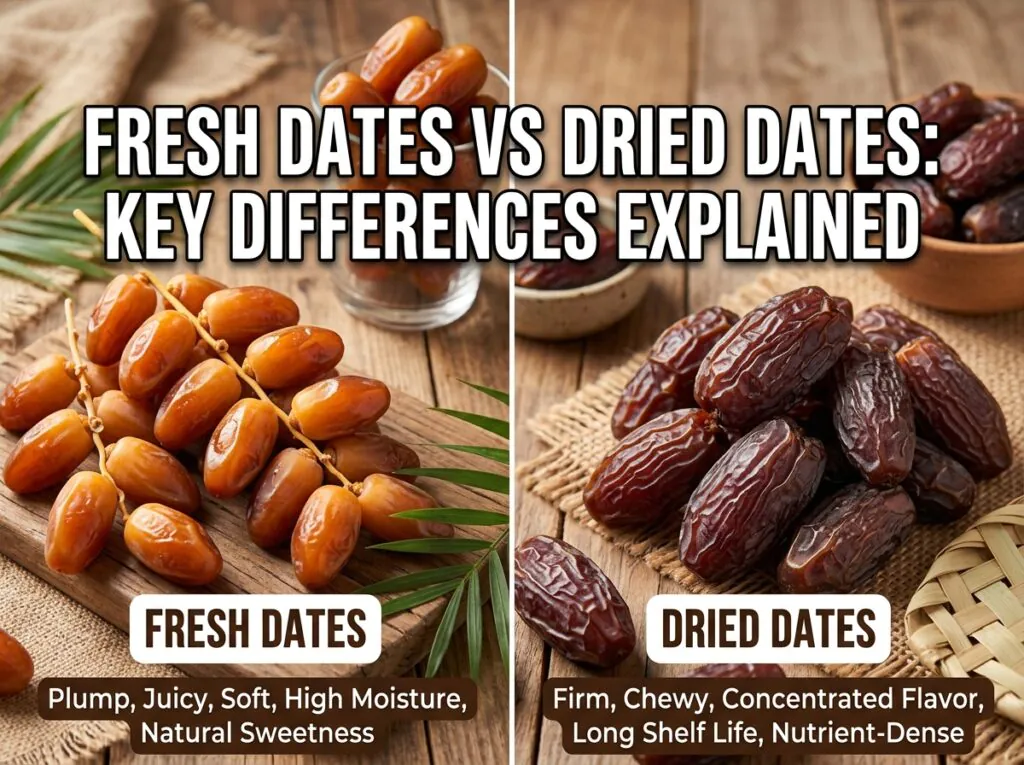
Comparing fresh dates vs. dried dates: key differences explained reveals how moisture content transforms taste, texture, and nutritional density. While both originate from the date palm tree (Phoenix dactylifera), their water levels alter how your body digests them and how long they stay fresh in your kitchen.
For retailers, food manufacturers, and health-conscious consumers across Europe, choosing the right variety depends on intended use, storage needs, and dietary goals. When sourcing premium options for commercial production or bulk retail, buyers frequently look to wholesale dates in bulk from Sahara Food EU to secure high-quality produce that satisfies demand across food processing and consumer markets.
1. Moisture Content and Texture Differences
The defining distinction between fresh and dried dates comes down to water content.
-
Fresh Dates (Rutab / Khalal): Harvested at earlier ripening stages, fresh dates contain roughly 60% moisture. This yields a plump, smooth skin, crisp to soft bite, and mild sweetness. Fresh dates feel like a fresh fruit—juicy, tender, and delicate.
-
Dried Dates (Tamer): Either left to dry naturally on the palm tree under desert heat or gently dehydrated post-harvest, dried dates lose most of their water weight, dropping to around 20% to 25% moisture. This loss creates wrinkled skin, a firm, chewy texture, and a rich, caramel-like sweetness.
If you enjoy a refreshing, lighter fruit experience, fresh dates hit the mark. If you prefer a chewy, dense sweet treat that mimics confectionery, dried dates are unmatched.
2. Caloric Density and Carbohydrate Profiles
Because water makes up a large portion of fresh dates, their nutritional footprint differs per 100 grams when compared to dehydrated varieties.
| Nutrient (per 100g) | Fresh Dates | Dried Dates |
| Water Content | ~60% | ~20-25% |
| Calories | ~142 kcal | ~277 kcal |
| Carbohydrates | ~37g | ~75g |
| Dietary Fiber | ~3.5g | ~8g |
Removing water concentrates the natural sugars (glucose and fructose) and calories in dried dates. A 100g serving of dried dates contains roughly double the calories and carbohydrates of 100g of fresh dates.
For weight management or lower-calorie snacking, fresh dates allow you to eat a larger physical volume with fewer calories. Conversely, for endurance athletes, hikers, or fast-breaking meals (like Iftar during Ramadan), dried dates offer rapid, energy-dense fuel in a small package.
3. Micronutrient Profiles: Heat Sensitivity vs. Concentration
Drying fruit alters vitamin and mineral concentration.
-
Fresh Dates Win on Heat-Sensitive Vitamins: Fresh dates retain higher amounts of Vitamin C. Vitamin C degrades when exposed to heat and long storage, meaning dried dates retain virtually none.
-
Dried Dates Win on Concentrated Minerals: Minerals do not evaporate during dehydration. Because dried dates are concentrated, they deliver higher amounts of Potassium, Magnesium, Iron, Calcium, and Dietary Fiber per 100g compared to fresh ones.
Both forms provide antioxidant protection through polyphenols, flavonoids, and carotenoids, helping fight oxidative stress and support heart health.
4. Shelf Life and Logistics
Storage and preservation are major factors when deciding between fresh and dried varieties, especially for commercial kitchens and distributors.
-
Fresh Dates: High moisture content makes fresh dates perishable. They require continuous refrigeration to prevent fermentation or mold, lasting several weeks to a few months depending on cold storage conditions.
-
Dried Dates: Reduced moisture makes dried dates naturally shelf-stable. Stored in a cool, dry place in airtight containers, they keep for up to 12 months at room temperature or up to 5 years when frozen, without relying on chemical preservatives.
This extended shelf life makes dried dates a dependable staple for supply chains, pantries, and food manufacturing across the EU.
5. Culinary Uses in Baking and Cooking
Both types of dates bring unique structural qualities to recipes:
-
Using Fresh Dates: Best sliced over fresh salads, paired with creamy cheeses like goat cheese or brie, or blended into light morning smoothies where extra liquid works well.
-
Using Dried Dates: The top choice for baking, raw energy balls, raw cake bases, and natural syrups. Dates like Medjool or Deglet Noor act as a natural binder in energy bars and serve as a direct, unrefined replacement for refined white sugar when blended into date paste.
Conclusion
Deciding between fresh and dried dates comes down to your operational or personal goals. Choose fresh dates for lower calorie density, light moisture, and higher Vitamin C. Opt for dried dates for concentrated energy, high fiber, mineral density, culinary binding power, and long shelf life.
At Sahara Food EU, we supply high-grade dates sourced directly from trusted growers, keeping your business fully stocked with nutritious, premium fruit.