
Finding the best organic dates involves more than just picking a box off the shelf; it requires an eye for detail and an understanding of natural cultivation. Whether you are a health-conscious consumer or a business looking for wholesale organic dates to supply your customers, knowing how to distinguish premium fruit from lower-grade stock is essential for both flavor and nutritional value.
At Sahara Food EU, we specialize in sourcing the finest varieties of dates, from the “King of Dates” Medjool to the nutrient-dense Aseel. In this guide, we will walk you through the professional standards for evaluating date quality, ensuring you get the most out of this ancient superfood.
1. The Visual Inspection: Color and Skin Integrity
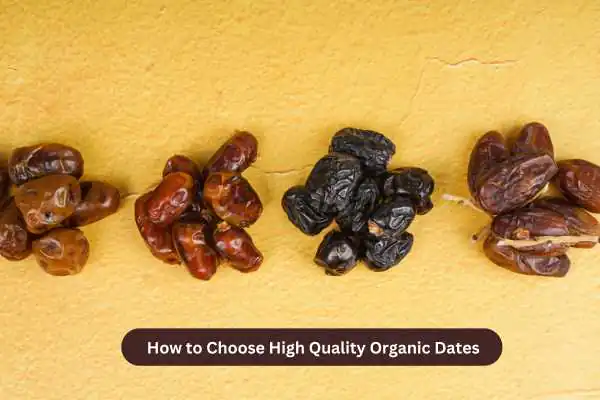
The first step in choosing high-quality organic dates is a thorough visual check. Premium dates should possess a uniform, rich color consistent with their specific variety.
-
Medjool Dates: Should be deep reddish-brown.
-
Ajwa Dates: Recognizable by their signature jet-black hue.
-
Deglet Noor: Should appear light amber or golden-brown.
Look closely at the skin. High-quality dates feature a natural, slight sheen—a sign of the fruit’s healthy oils. Avoid dates that appear excessively shiny or “wet,” as this may indicate they have been coated in glucose syrup or vegetable oils to mask age. While minor wrinkles are normal due to the natural drying process, the skin should be intact. Extensive peeling (known as “skin separation”) or large cracks can lead to the fruit drying out too quickly or becoming a breeding ground for contaminants.
2. Texture and “The Squeeze Test”
Organic dates are classified into three categories: soft, semi-dry, and dry. Understanding these textures is key to identifying freshness.
When you gently press a premium date between your fingers, it should feel plump and yielding, not brittle or rock-hard. A fresh date has a “toffee-like” consistency dense and chewy.
Red Flags to Watch For:
-
Sugar Crystallization: White, grainy specks on the skin are often mistaken for mold. This is actually “sugar bloom,” where natural sugars migrate to the surface. While safe to eat, it indicates the dates are older and have lost their peak moisture.
-
Excessive Hardness: If the date feels like a stone, it has likely been stored improperly or is past its prime shelf life.
-
Mushiness: If the fruit collapses or feels slimy, it may be fermenting due to high moisture content (above 28%).
3. The Sensory Profile: Aroma and Taste
High-quality organic dates carry a delicate, honey-like or caramel aroma. Because organic farming avoids synthetic pesticides and chemical ripening agents, the scent remains clean and natural.
If you notice a sharp, vinegary, or “boozy” smell, the dates have begun to ferment. This usually happens when they aren’t stored in temperature-controlled environments. Upon tasting, a premium organic date should deliver a clean sweetness without any bitter aftertaste or “dusty” mouthfeel.
4. Why “Organic” Matters in Quality Selection
Choosing organic isn’t just a lifestyle choice; it directly impacts the physical quality of the fruit. Conventional dates are often treated with methyl bromide or other fumigants to prevent pests. Organic dates, like those provided by Sahara Food EU, rely on natural pest management and careful harvesting.
Because organic dates aren’t “forced” to ripen with chemicals, they develop their sugars more slowly, resulting in a more complex flavor profile and higher antioxidant density. When sourcing wholesale, always look for BRC-certified facilities that use X-ray and laser sorting. This technology ensures that even though the dates are grown naturally, they are free from internal defects or “hidden” pests that the human eye might miss.
Summary Checklist for Choosing Dates
| Feature | High-Quality (Premium) | Low-Quality (Avoid) |
| Appearance | Uniform color, natural sheen | Discolored, dull, or overly greasy |
| Skin | Mostly intact, fine wrinkles | Large tears, excessive skin peeling |
| Texture | Soft, chewy, “meaty” | Brittle, rock-hard, or slimy |
| Aroma | Sweet, caramel-like | Sour, fermented, or musty |
| Sugar | No visible crystals | Heavy white “bloom” on the surface |
Partner with Sahara Food EU for Premium Sourcing
Whether you are looking for bulk pitted dates, date paste for manufacturing, or whole Medjools for retail, quality is non-negotiable. At Sahara Food EU, we bridge the gap between ethical farms and the European market, providing BRC-certified, laser-sorted organic dates that meet the highest international standards.