
Choosing high-quality organic dried fruits is the ultimate way to ensure your snacks are free from synthetic pesticides while retaining their full nutritional density. For health-conscious consumers and culinary professionals alike, the transition from conventional to organic isn’t just a trend it is a commitment to purity and environmental sustainability.
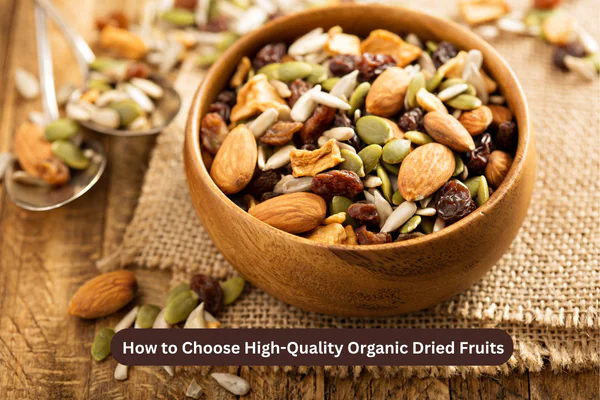
However, the market is flooded with various grades of produce, making it difficult to distinguish truly premium stock from subpar alternatives. At Sahara Food EU, we specialize in providing wholesale Organic dried fruits that meet rigorous BRC and organic certification standards, ensuring that every bite delivers the authentic flavor profile nature intended.
In this guide, we will walk you through the essential indicators of quality, the science of organic preservation, and how to spot the best dried fruits for your pantry or business.
1. Look for the “Organic Certificate” Seal
The first and most non-negotiable step is verifying the certification. Unlike “natural” or “pure,” the term Organic is legally protected in the EU and UK. High-quality organic dried fruits must be grown without synthetic fertilizers, herbicides, or GMOs.
-
EU Organic Leaf: Look for the green leaf logo on the packaging.
-
Traceability: Premium suppliers can provide a clear “paper trail” from the farm to the final package.
-
No Sulfur Dioxide: Conventional dried fruits (like bright orange apricots) often use sulfur dioxide ($SO_2$) to maintain artificial colors. True organic dried fruits are usually darker or more “earthy” in tone because they are preserved naturally.
2. Visual and Sensory Indicators of Freshness
Nature isn’t always perfectly uniform, but high-quality dried fruits follow specific visual cues.
The Color Test
Natural oxidation is a hallmark of organic processing. For example, organic dried apricots will be dark brown rather than neon orange. This indicates the absence of chemical bleaching agents. Similarly, organic dates (Khajoor) should have a consistent, deep hue—whether it’s the amber of a Deglet Noor or the rich chocolate-brown of a Medjool.
Texture and Plumpness
High-quality dried fruit should be plump and pliable. If a piece of fruit is brittle, excessively hard, or shriveled to the point of being “woody,” it has likely been over-processed or stored for too long.
-
Dates: Should be soft but hold their shape when pressed.
-
Figs: Should have a slight “give” and a moist interior.
-
Raisins: Should be juicy, not like small pebbles.
3. The “No Added Sugar” Rule
One of the most common pitfalls in choosing dried fruit is falling for “infused” products. Many brands add cane sugar, apple juice concentrate, or corn syrup to fruits like cranberries or mangoes to mask lower-quality harvests.
Premium organic dried fruits require no enhancers. Their natural glucose and fructose levels are concentrated during the dehydration process, providing a sophisticated sweetness that artificial sugars cannot replicate. Always check the ingredient list: it should ideally contain only one item—the fruit itself.
4. Understanding the Drying Process: Sun-Dried vs. Dehydrated
The method of moisture removal significantly impacts the final nutrient profile.
-
Sun-Drying: This traditional method uses solar energy ($UV$ rays). It is slow and preserves the “jammy” texture of fruits like figs and dates.
-
Tunnel Dehydration: A more controlled, industrial method that uses warm air. While efficient, it must be done at specific temperatures (usually below 60°C) to ensure heat-sensitive vitamins like Vitamin C and B-complex are not destroyed.
5. Storage and Packaging Integrity
Even the best organic harvest can be ruined by poor post-production handling. Oxygen and moisture are the enemies of shelf life.
-
Airtight Seals: Look for vacuum-sealed or high-barrier resealable pouches.
-
BPA-Free Materials: Ensure the packaging doesn’t leach chemicals into the oily surfaces of the fruit.
-
Temperature Control: Organic fruits are “alive” with natural enzymes. They should be stored in cool, dry environments to prevent fermentation or mold growth.
Why Source from Sahara Food EU?
As a trusted name in the industry, Sahara Food EU bridges the gap between traditional farming and modern food safety. Our commitment to wholesale Organic dried fruits means we don’t just move boxes; we vet our sources at the farm level. Whether you are looking for succulent Pitted Dates, Organic Apricots, or nutrient-dense Nuts, we ensure that every batch undergoes strict quality control.