
Mastering the art of baking with organic coconut flour opens up a world of gluten-free, grain-free, and high-fiber possibilities for your kitchen. Unlike traditional grain flours, this unique ingredient behaves entirely on its own terms, offering a rich texture and a subtle natural sweetness that can completely transform your baked goods.
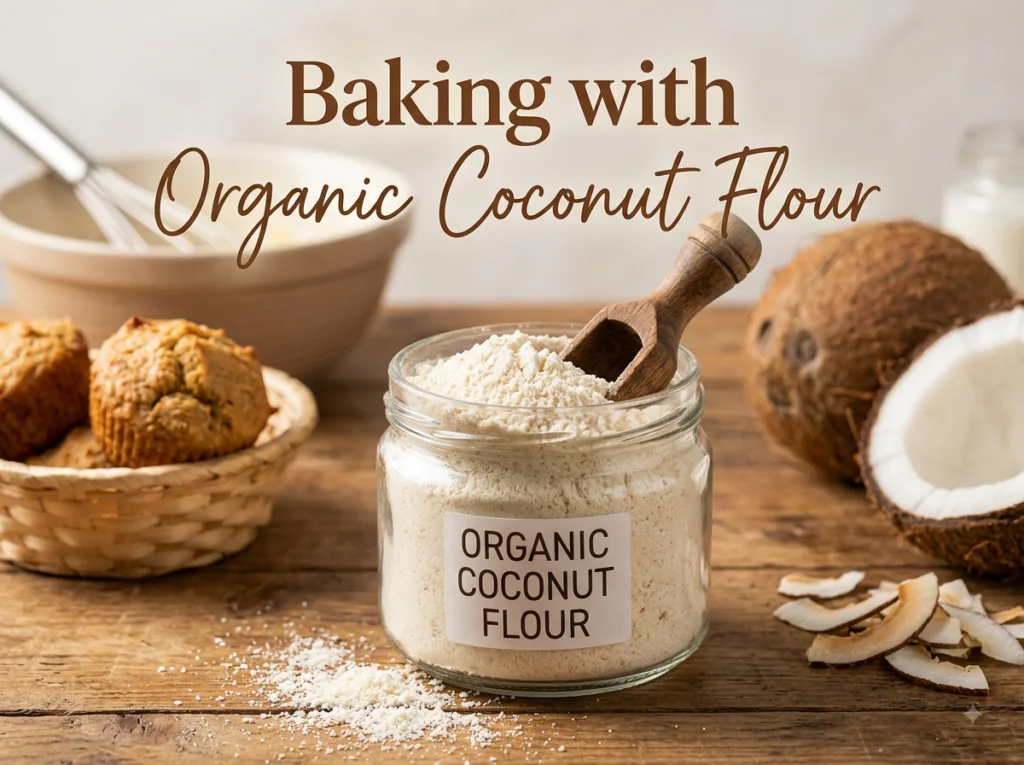
When commercial bakeries, food manufacturers, and pastry chefs across Europe look to balance flavor and functional health, they choose to [buy wholesale Organic Coconut in bulk](https://saharaukfoods.eu/organic-Coconut /) from Sahara Food EU. Transitioning to certified organic coconut flour guarantees that your ingredients are processed cleanly, leaving behind zero toxic residues, bleached additives, or chemical extenders—just the pure, high-performance plant fiber your recipes require.
1. The Anatomy of Organic Coconut Flour: Why It’s Unique
To bake successfully with coconut flour, you must first understand that it is not a direct substitute for wheat, almond, or oat flour. Coconut flour is created from the solid, dried meat left behind after coconut oil or milk has been extracted.
Because it is almost entirely comprised of plant fiber and protein, its structural absorbency is unmatched. It acts like a culinary sponge, drawing in immense amounts of liquid. A recipe that calls for two cups of wheat flour might only require a half or a third of a cup of organic coconut flour to achieve a similar batter consistency.
2. The Golden Rules of Liquid-to-Flour Ratios
The most common mistake when working with coconut flour is using too much flour or too little liquid, resulting in a dense, crumbly, or unpleasantly dry texture. To maintain moisture and structure, follow these foundational guidelines:
-
The 1:4 Ratio Benchmark: As a baseline rule of thumb, for every cup of organic coconut flour you use, you generally need to introduce up to one cup of liquid (such as coconut milk, water, or oil) and roughly six large eggs.
-
The Power of Eggs: Eggs are critical when baking with coconut flour. Because coconut lacks gluten—the protein responsible for elasticity and binding in traditional baking—the structure must come from another source. Eggs provide the necessary moisture, lift, and protein binding matrix to prevent your cakes and muffins from falling apart.
-
Let the Batter Rest: Once you mix your wet and dry ingredients together, let the batter sit undisturbed on the counter for 5 to 10 minutes. This gives the coconut fiber adequate time to fully hydrate, allowing you to see the true thickness of your batter before it goes into the oven.
3. Modifying Existing Recipes
If you want to adapt a traditional family recipe rather than using a dedicated coconut flour formula, gradual adjustments are necessary.
Start by replacing no more than 20% to 25% of the grain flour with organic coconut flour. For every quarter-cup of coconut flour you add, match it with an equivalent quarter-cup of additional liquid and one extra egg. This balanced approach allows you to reap the nutritional benefits of a high-fiber ingredient without sacrificing the familiar crumb texture of your favorite breads and pastries.
4. Unmatched Nutritional Profile for Clean-Label Baking
Baking with organic coconut flour isn’t just a technical choice—it’s a massive nutritional upgrade for your menu or product line:
-
High Dietary Fiber: It contains substantially more fiber per gram than whole wheat flour, promoting better digestive health and prolonged satiety.
-
Low Glycemic Impact: Rich in healthy fats and proteins, it slows down glucose absorption, preventing the sharp blood sugar spikes associated with refined starches.
-
Naturally Grain-Free and Paleo-Friendly: It aligns perfectly with modern dietary preferences, from strict gluten-free requirements to ketogenic and paleo lifestyles.
5. Pro-Tips for Perfect Coconut Flour Creations
To ensure consistent success with your next baking venture, keep these practical tips in mind:
-
Sift Thoroughly: Because of its dense fiber network, coconut flour is prone to clumping in storage. Always sift it through a fine-mesh strainer before measuring to ensure a smooth, lump-free batter.
-
Incorporate Starch for Flexibility: If you find your gluten-free cakes are slightly too fragile, blend a small amount of organic tapioca starch or arrowroot powder with your coconut flour. This adds a subtle elasticity that mimics the chewiness of gluten.
-
Watch the Oven Closely: Because it contains natural sugars and dense fibers, coconut flour treats tend to brown faster on the outside. Consider dropping your baking temperature slightly (by about 10–15°C) and extending the bake time to ensure the center cooks through perfectly without scorching the exterior.
Conclusion
Baking with organic coconut flour is an incredibly rewarding culinary skill that yields nutrient-dense, wonderfully textured, and naturally flavorful results. By mastering its unique moisture requirements and appreciating its high-absorbency nature, you can confidently craft premium, health-forward items that stand out in today’s competitive food market.
At Sahara Food EU, we specialize in sourcing the cleanest bulk ingredients to help your business innovate with confidence. Explore our premium wholesale organic selections today and take your clean-label baking to the next level.