
If you are looking for the definitive answer to the question, can you freeze organic dried apricots, the quick answer is a resounding yes. Freezing is an exceptional, underutilized method to lock in the vibrant flavor, moisture, and nutritional value of this premium sun-dried fruit for long-term storage.
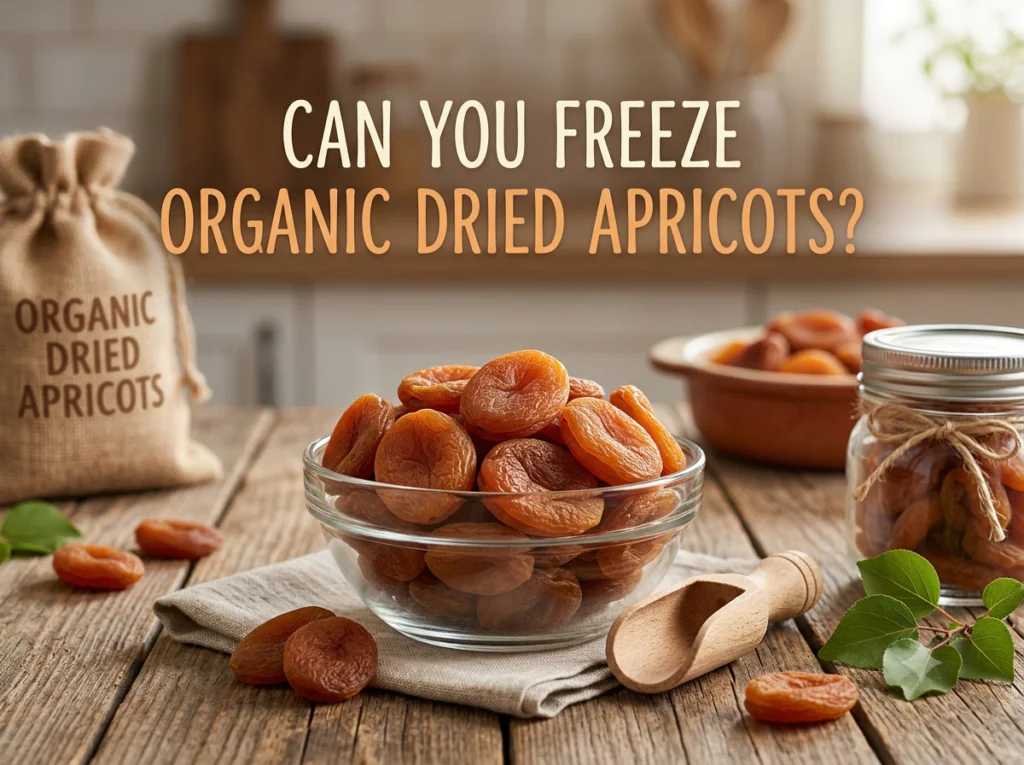
For commercial kitchens, bakeries, or retail distributors who choose to buy wholesale Organic Dried Apricots in bulk, managing inventory shelf-life efficiently is key to maintaining product quality. While dried fruits already boast a stable storage life due to their low moisture content, the zero-chemical processing of organic varieties makes freezing a smart tactical move to prevent natural deterioration.
Why Freeze Organic Dried Apricots?
To appreciate why freezing is so effective, it helps to understand how organic dried apricots differ from conventional ones.
Conventional dried apricots are treated with sulfur dioxide ($SO_2$), a preservative that artificially maintains a bright orange color and acts as an antimicrobial agent. Organic dried apricots skip this entirely. They are sun-dried naturally, giving them a deep brownish-orange hue, a richer molasses-like flavor, and a completely clean ingredient profile.
Because they lack synthetic preservatives, organic apricots are slightly more sensitive to environmental factors over long periods:
-
Oxidation: Continuous exposure to oxygen gradually darkens the fruit and alters the flavor profile over months.
-
Moisture Fluctuations: In humid environments, dried fruits can absorb ambient moisture, creating a risk for mold growth.
-
Sugar Crystallization: Over time, natural sugars can migrate to the surface of the fruit, causing a white, sugary coating that changes the mouthfeel.
Freezing halts these processes completely. It places the natural sugars and minimal residual moisture into a state of stasis, preserving that fresh, “jammy” texture indefinitely.
The Step-by-Step Guide to Freezing Dried Apricots
To ensure your apricots do not turn into a solid, unmanageable block or suffer from freezer burn, follow this straightforward packaging method.
Step 1: Flash Freezing (Optional but Highly Recommended)
If your apricots feel particularly tacky or moist, spread them out in a single layer on a baking sheet lined with parchment paper. Place the tray in the freezer for 1 to 2 hours. This quick step freezes each apricot individually, preventing them from fusing together later.
Step 2: Choose the Right Packaging
Air is the enemy of frozen food. Use high-quality, heavy-duty freezer bags or vacuum-seal pouches. If you are dealing with large commercial quantities from a bulk order, divide the stock into smaller, usable portions before packing so you only thaw what you need.
Step 3: Eliminate Air
Squeeze out as much air as possible from the freezer bag before sealing it. If you have access to a vacuum sealer, use it—this is the single best way to guarantee zero frost damage.
Step 4: Label and Date
Always write the date of storage on the packaging. While they will remain safe to eat almost indefinitely at $0^\circ\text{F}$ ($-18^\circ\text{C}$), they will retain peak flavor quality for up to 12 to 18 months.
Thawing and Using Frozen Dried Apricots
Bringing frozen organic apricots back to room temperature is incredibly simple, but a few small tips will ensure they maintain their perfect texture.
For Direct Snacking or Cheese Boards
Remove the exact portion you need from the freezer bag, reseal the remaining stock immediately, and place the portions on a plate. Let them thaw at room temperature for about 20 to 30 minutes. They will quickly regain their characteristic chewiness and rich flavor.
For Baking and Cooking
If you are chopping the apricots to use in fruitcakes, scones, or tagines, you do not even need to wait for them to thaw fully. In fact, slightly frozen dried fruits are much easier to slice cleanly with a knife without sticking to the blade.
If your recipe requires plump, juicy fruit pieces, you can drop the frozen apricots straight into a bowl of hot water, juice, or tea to rehydrate them instantly.
Frequently Asked Questions
Do frozen dried apricots lose their nutritional value?
No. Freezing is highly effective at locking in vitamins and minerals. The dietary fiber, iron, potassium, and rich cell-protecting carotenoids (which your body converts to Vitamin A) found in organic apricots remain fully intact.
Can I refreeze them after thawing?
It is best to avoid repeated freezing and thawing cycles. Each cycle introduces ambient moisture condensation, which can make the texture mushy over time. Portion control during the initial packing phase easily solves this issue.
Conclusion
Freezing is an effortless, highly efficient solution to extend the life of your premium pantry staples. It protects the fruit from oxygen, controls moisture, and keeps the authentic flavor profile alive until the exact moment you are ready to create your next recipe.
For businesses and passionate culinarians looking to source the highest quality ingredients, Sahara Food EU offers exceptional, naturally dried options. Safeguard your kitchen investments with proper storage techniques, and enjoy the pure taste of organic fruit year-round.