
Learning how to choose the best quality dates is essential if you want to enjoy maximum flavor, natural sweetness, and peak nutrition from every single bite. Whether you are sourcing them for home baking, industrial food manufacturing, or retail shelves, knowing what separates premium dates from subpar batches ensures you always make an informed decision.
At Sahara Food EU, we specialize in providing food businesses and retailers across Europe with top-tier agricultural produce, including wholesale dates in bulk sourced from certified BRC facilities. Understanding the physical traits, variety distinctions, moisture content, and processing standards of high-grade dates allows you to select fruits that meet strict commercial and culinary expectations.
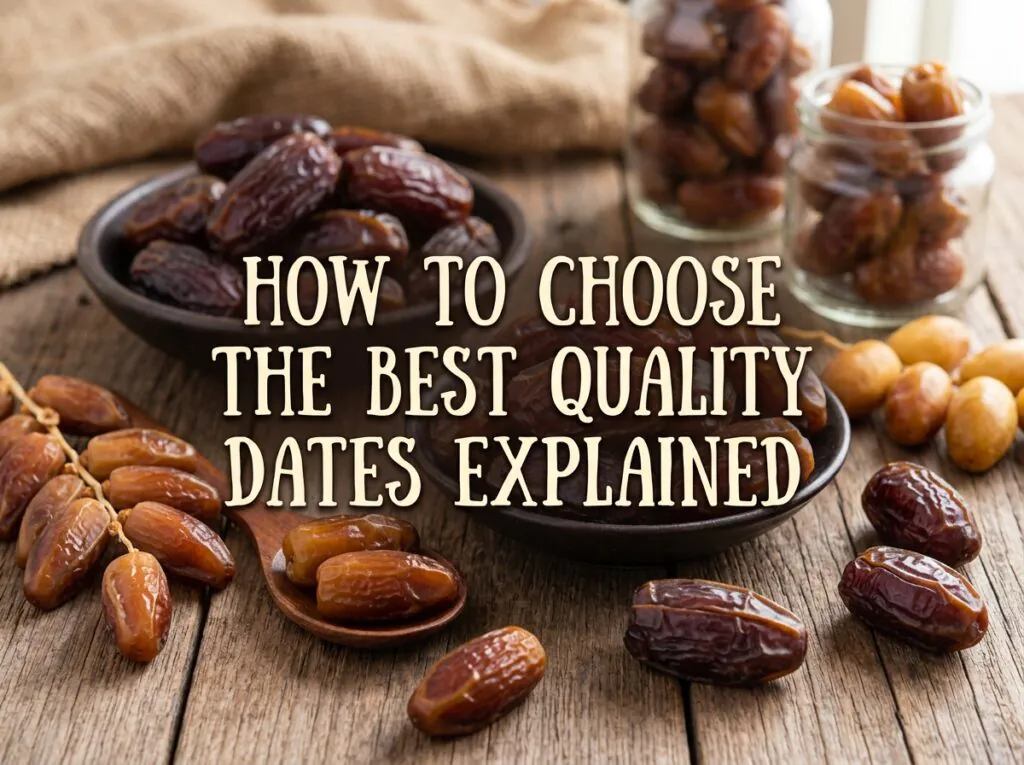
1. Visual Inspection: Skin Condition, Color, and Sheen
The initial indicator of date quality lies in visual appearance. While different date varieties vary in color and size, high-quality fruit shares clear visual characteristics regardless of type:
-
Skin Integrity: Look for dates with intact skin that adheres well to the flesh. While slight flaking or wrinkling is natural as the fruit dries on the palm, severe skin sloughing (where the outer layer detaches entirely) indicates poor storage conditions or excessive moisture loss.
-
Consistent Coloration: Premium dates display uniform amber, deep brown, or near-black tones depending on the cultivar. Avoid dates with blotchy, discolored patches or white streaks, which can signal uneven drying or early mold development.
-
Natural Sheen Without Stickiness: Fresh, high-grade dates have a gentle, natural sheen on their surface. Be cautious of dates that look heavily glossy or feel sticky, as lower-tier suppliers sometimes coat fruit with glucose or synthetic syrups to mask dull, dried-out produce.
2. Texture and Moisture Balance
Texture dictates both the eating experience and how the date performs in recipes or industrial processing. Dates fall into three main moisture categories: soft, semi-dry, and dry. Selecting the right quality means evaluating the texture within its specific category:
-
Soft Dates (e.g., Medjool, Mazafati): Should feel plump, yielding, and squishy under gentle pressure without tearing or leaking juice.
-
Semi-Dry Dates (e.g., Deglet Noor, Aseel): Should offer a chewy, firm texture that yields smoothly when bitten. They should never feel rock-hard or brittle.
-
Dry Dates (e.g., Zahedi): Firm with lower moisture content, ideal for chopping, milling into date sugar, or long-term ambient storage.
If a date feels overly dry, fibrous, or tough, it has likely exceeded its prime storage window or was harvested prematurely. Conversely, if it feels wet or sour-smelling, fermentation has set in.
3. Understanding Sugar Bloom vs. Mold
One common point of confusion when evaluating date quality is sugar crystallization, often called “sugar bloom.“
-
Sugar Bloom: Over time, natural fruit sugars (glucose and fructose) can migrate to the surface of the skin, forming tiny white crystals or a light powdery dusting. This is completely safe, natural, and reversibly dissolved with gentle heating. Sugar bloom indicates low ambient humidity rather than spoilage.
-
Mold and Yeast: Mold appears as fuzzy, fibrous, or greyish-white spots, typically concentrated around the stem cap or inside the pit cavity. Mold is accompanied by an off-putting, fermented smell. Quality dates should always be free from any fungal growth or yeast fermentation.
4. Know Your Date Variety and Purpose
Choosing the best date depends heavily on what you plan to do with it. Premium suppliers offer specific varieties suited for different culinary and manufacturing applications:
| Variety | Texture & Profile | Best Used For |
| Medjool | Large, soft, caramel-like sweetness | Fresh snacking, gourmet stuffing, retail packs |
| Aseel | Medium firmness, rich flavor, high yield | Chopped dates, industrial baking, energy bars |
| Deglet Noor | Semi-dry, nutty, amber color | Dicing, snack mixes, everyday kitchen baking |
| Sayer | Semi-dry, dark, robust sweetness | Maceration, date paste, syrup extraction |
| Ajwa | Dark, fine-textured, herbal undertones | Specialty retail, direct consumption, dietary supplements |
Matching the variety to your intended application prevents wastage and guarantees optimal flavor and texture.
5. Technical Quality Controls: X-Ray, Laser Sorting, and Pitting
When buying dates at scale, visual inspection alone isn’t enough. Commercial quality relies on rigorous processing technology to catch defects that the human eye cannot spot:
-
X-Ray and Laser Sorting: High-end facilities pass harvested dates through laser and X-ray sorters to detect pit fragments, internal decay, embedded sand, or foreign matter.
-
Clean Pitting: Pitted dates should retain structural integrity while being 99.9% pit-free, ensuring safety for automated baking machinery or direct consumer enjoyment.
-
Certifications: Look for suppliers backed by international food safety standards such as BRC (British Retail Consortium) or Organic certification, which audit cleanliness, traceability, and ethical sourcing practices.
6. Proper Storage and Handling Practices
Even the highest quality dates will deteriorate if handled incorrectly after harvest. When receiving or storing dates:
-
Temperature Control: Store dates in cool environments (0°C to 4°C for short to medium term; -18°C for extended storage) to preserve color, prevent sugar bloom, and stop oxidation.
-
Humidity Management: Maintain relative humidity between 60% and 70% to prevent the dates from drying out or absorbing ambient moisture.
-
Airtight Packaging: Keep dates sealed in food-grade bags or cardboard cartons to protect them from absorbing surrounding odors and to deter pests.
The Sahara Food EU Standard
Choosing the best quality dates comes down to assessing skin condition, texture balance, varietal fit, and certified sorting standards. At Sahara Food EU, every batch of dates—from whole Medjool to chopped Aseel and organic date paste—undergoes strict quality assurance to ensure uncompromised taste, texture, and food safety for your business.