
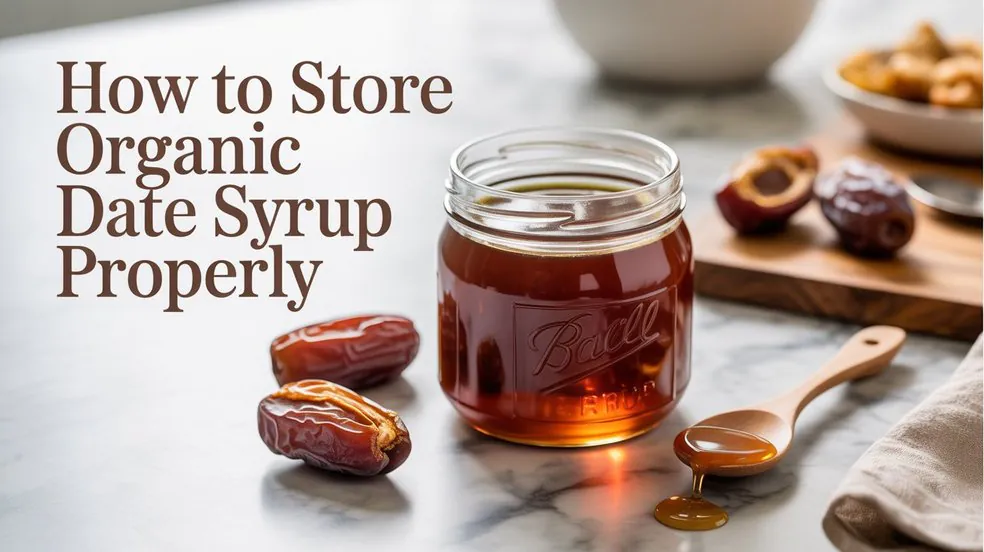
Learning how to store organic date syrup properly is essential for maintaining its rich, caramel-like flavor and ensuring its impressive nutritional profile remains intact over time. As a natural alternative to refined sweeteners, date syrup—also known as Silan—is a living product of the fruit it comes from, meaning it requires specific care to prevent fermentation or crystallization.
Whether you are a home cook or a commercial baker who chooses to purchase Organic Date Syrup in Bulk, understanding the science of shelf-life will help you reduce waste and keep your ingredients at peak quality. At Sahara Food EU, we believe that high-quality organic products deserve high-quality storage practices.
The Nature of Organic Date Syrup
Unlike many commercial syrups that are loaded with preservatives or high-fructose corn syrup, organic date syrup is a minimally processed product. It consists of concentrated date juice that has been simmered and strained. Because it contains natural sugars (fructose and glucose) and a significant amount of magnesium, potassium, and antioxidants, it is sensitive to environmental changes.
Improper storage can lead to three main issues:
-
Crystallization: Where the sugars solidify into a gritty texture.
-
Fermentation: Occurring if moisture enters the container, leading to a sour smell.
-
Oxidation: Which can dull the deep, dark flavor and diminish the antioxidant properties.
The Ideal Storage Environment: Temperature and Light
The most important factor in date syrup longevity is the environment. Organic date syrup is best kept in a cool, dark, and dry place.
1. Avoid Direct Sunlight
UV rays can break down the natural compounds in organic syrup. Always store your containers inside a pantry or a cupboard rather than on a sunny countertop. Direct light can cause localized heating inside the bottle, which encourages the growth of yeast if any contaminants are present.
2. Temperature Stability
A consistent temperature is better than a fluctuating one. While the syrup is shelf-stable at room temperature (around 18°C to 22°C), it should be kept away from heat sources like the oven, stovetop, or dishwasher. Excessive heat can thin the syrup and eventually alter its chemical structure, leading to a “burnt” aftertaste.
To Refrigerate or Not?
One of the most common questions we receive at Sahara Food EU is whether date syrup belongs in the fridge. The answer depends on how quickly you plan to use it.
-
Pantry Storage: If you use your syrup daily or weekly, pantry storage is perfectly fine. It keeps the syrup at a pourable, honey-like consistency that is easy to drizzle over porridge or pancakes.
-
Refrigerated Storage: If you have purchased a large quantity and don’t expect to finish it within a few months, refrigeration is the safest bet. It significantly slows down the natural aging process and prevents any risk of fermentation.
Note on Texture: In the fridge, date syrup will thicken considerably. If it becomes too thick to pour, simply place the bottle in a bowl of warm water for a few minutes to restore its viscosity.
Choosing the Right Container
If you buy in bulk, you may need to transfer the syrup into smaller vessels for daily use. The material of the container plays a huge role in preservation.
Glass vs. Plastic
Glass is the gold standard for storing organic sweeteners. It is non-porous, does not leach chemicals, and provides a superior barrier against oxygen. If you use plastic, ensure it is BPA-free and high-density polyethylene (HDPE), which is more resistant to gas permeation.
The Importance of an Airtight Seal
Every time you open the bottle, you expose the syrup to oxygen and potential airborne spores. Always ensure the cap is tightened firmly. A sticky residue around the rim can prevent a perfect seal; it is a good habit to wipe the neck of the bottle with a clean, damp cloth after every use to ensure the lid closes completely.
Avoiding Cross-Contamination
This is the number one cause of “spoiled” syrup. Because organic date syrup has no artificial preservatives, it is vulnerable to bacteria introduced from the outside.
-
The “Clean Spoon” Rule: Never double-dip. If you are measuring syrup for a recipe, use a clean, dry spoon every single time.
-
Moisture is the Enemy: Even a single drop of water introduced into the bottle can trigger fermentation. Ensure your measuring tools are completely dry before they touch the syrup.
How to Tell if Your Date Syrup Has Gone Bad
While date syrup has a very long shelf life—often up to 18–24 months if stored correctly—you should always check for signs of spoilage before use:
-
The Smell Test: If the syrup has a sharp, vinegary, or alcohol-like aroma, it has likely fermented and should be discarded.
-
Visible Mold: While rare in high-sugar concentrates, any fuzzy growth on the surface or the lid is a clear indicator of contamination.
-
Gas Build-up: If you hear a “hiss” of air when opening a sealed bottle, or if the plastic container appears bloated, fermentation has occurred.
Dealing with Crystallization
If your syrup develops a grainy texture, don’t worry—it hasn’t gone bad. This is a natural process where the sugar molecules bind together. To fix this, place the glass jar in a “bain-marie” (a bowl of hot, but not boiling, water) and stir gently until the crystals dissolve. Avoid using a microwave, as it creates “hot spots” that can scorch the delicate sugars.
Conclusion
Proper storage is the final step in the journey from the date palm to your plate. By controlling the temperature, light exposure, and cleanliness of your storage area, you ensure that every drop of your organic date syrup remains as delicious and nutritious as the day it was pressed.
For those looking to stock their pantry or commercial kitchen with the highest quality ingredients, choosing Sahara Food EU ensures you are starting with a premium product designed to last.