
Learning how to store organic dried fruits correctly is the secret to preserving their rich flavor, chewy texture, and dense nutritional value for months or even years. Because premium organic dried fruits are produced without synthetic chemical preservatives or sulfur dioxide, they require a bit more care than conventional, chemically treated alternatives to prevent spoilage and maintain quality.
When you buy wholesale oganic dried fruits from Sahara Food EU, you are investing in high-quality, unadulterated whole foods. Taking a proactive approach to storage ensures that your inventory—whether it is a bulk commercial shipment or a supply for your family pantry—remains as fresh, plump, and delicious as the day it arrived.
The Enemies of Extracted Moisture: Heat, Light, and Air
To understand the best storage practices, it helps to understand what causes dried fruit to degrade. The drying process removes the majority of the fruit’s water content, which naturally inhibits bacteria and mold growth. However, organic dried fruits still retain a small amount of residual moisture (typically between 15% and 20%) to keep them soft and palatable.
When exposed to unfavorable conditions, this delicate balance is disrupted. Three primary environmental factors accelerate the aging process of your dried produce:
-
Oxygen: Exposure to air causes the natural oils and sugars in the fruit to oxidize, leading to stale flavors, structural hardening, and a loss of vibrant color.
-
Moisture and Humidity: If dry fruit absorbs moisture from a humid room, the water content rises back into the danger zone, inviting mold spores and yeast to multiply.
-
Heat: Warm temperatures cause the natural fruit sugars to break down and sweat out, creating a sticky mess and degrading the essential vitamins and antioxidants packed inside.
Step 1: Choosing the Perfect Container
The original packaging your dried fruits arrive in is rarely ideal for long-term storage once it has been opened. Your first step should always be transferring your fruits into a highly secure, non-porous container.
Glass Jars with Airtight Seals
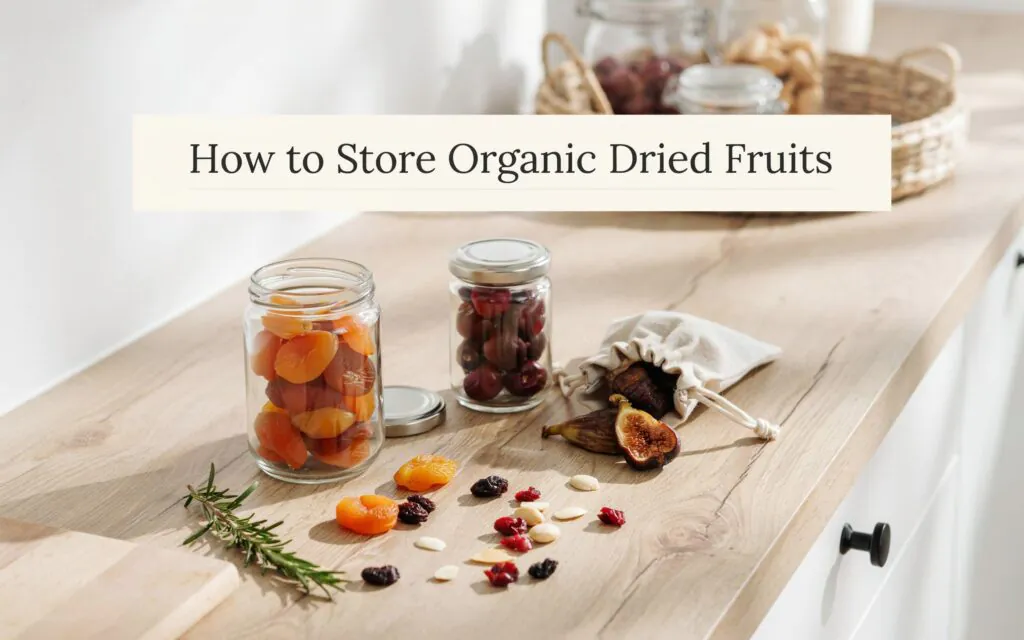
Glass is arguably the finest material for home pantries and small-scale commercial kitchens. Standard mason jars or glass storage containers with rubber gaskets and locking mechanisms completely block air and moisture transfer. As an added bonus, glass does not leach chemicals or absorb odors from highly aromatic fruits like figs or apricots.
Food-Grade Mylar Bags
For bulk storage or commercial operations, food-grade Mylar bags paired with a heat-sealer offer maximum protection. Mylar is completely opaque, resolving light exposure issues while creating an impenetrable barrier against ambient air and pests.
Vacuum Sealing
If you plan to store your dried fruits for six months or longer, vacuum sealing is highly effective. Removing all oxygen from the bag prevents oxidation entirely and compresses the footprint of your storage, saving valuable shelf space.
Step 2: Selecting the Storage Environment
Where you place your airtight containers depends entirely on how quickly you intend to consume or sell the fruit.
1. The Cool Pantry (Short-Term: 3 to 6 Months)
If you use your dried fruits regularly for daily baking, snacking, or culinary production, a dark pantry, cupboard, or cellar is perfectly adequate. The temperature should ideally remain consistently below 15°C (60°F). Keep the containers off the floor, away from direct sunlight, and away from heat-generating appliances like ovens, dishwashers, or refrigerators.
2. The Refrigerator (Medium-Term: 6 to 12 Months)
Refrigeration is highly recommended for organic dried fruits because the constant low temperature drastically slows down chemical degradation. The cool environment prevents natural sugars from crystallizing on the skin of the fruit (a harmless but aesthetically unappealing process known as sugaring). Ensure the container is truly airtight; otherwise, the fruit will absorb the odors of surrounding foods like onions or cheese.
3. The Freezer (Long-Term: 1 to 2+ Years)
For long-term preservation, freezing is the gold standard. It halts all biological and chemical processes without altering the cellular structure of the fruit. Because dried fruit has so little water content, it rarely freezes into a solid rock, meaning you can often take out exactly what you need without thawing the entire batch.
Specialized Care for Organic Dates (Khajoor)
Organic dates deserve a special mention because their high sugar content and unique texture require specific handling. Soft varieties of dates (such as Medjool or Sukari) have higher moisture content than semi-dry or dry varieties.
If left at room temperature for too long, soft organic dates will continue to ripen, lose their moisture, and eventually ferment due to their natural yeast content. For optimal quality, always store your organic dates in the refrigerator or freezer. Freezing keeps them wonderfully chewy and “jammy,” allowing them to be eaten straight out of cold storage as a quick snack.
How to Check for Quality and Spoilage
Even under perfect conditions, it is wise to periodically inspect your stored inventory. Look out for these signs to determine if your dried fruit is still prime for consumption:
-
The Sniff Test: Fresh dried fruit should smell sweet, earthy, and deep. If a container smells sour, musty, or alcohol-like, fermentation has occurred, and the batch should be discarded.
-
Mold Inspection: Look closely at the creases of the fruit. Any fuzzy white, green, or black spots indicate that moisture managed to sneak into your container.
-
Sugaring vs. Mold: Sometimes, white spots appear on dates or raisins that resemble mold but are actually just crystallized sugars that have migrated to the surface. You can test this by running a piece under warm water; if the white spots dissolve instantly, it is harmless sugar, and the fruit is completely safe to eat.
Conclusion
Maximizing the shelf life of your organic dried fruits comes down to a simple, disciplined routine: seal them airtight, keep them out of the light, and drop the temperature. By respecting the natural properties of unpreserved fruits, you ensure that every single raisin, date, and apricot retains its premium quality, allowing Sahara Food EU’s exceptional harvests to shine in your kitchen all year round.