
Learning how to store organic dried pineapple properly is essential if you want to preserve the fruit’s vibrant tropical sweetness, pleasant chewiness, and rich nutrient profile over time. Without synthetic preservatives or artificial chemicals, premium organic dried fruit requires a few simple storage precautions to prevent moisture absorption, oxidation, and flavor degradation.
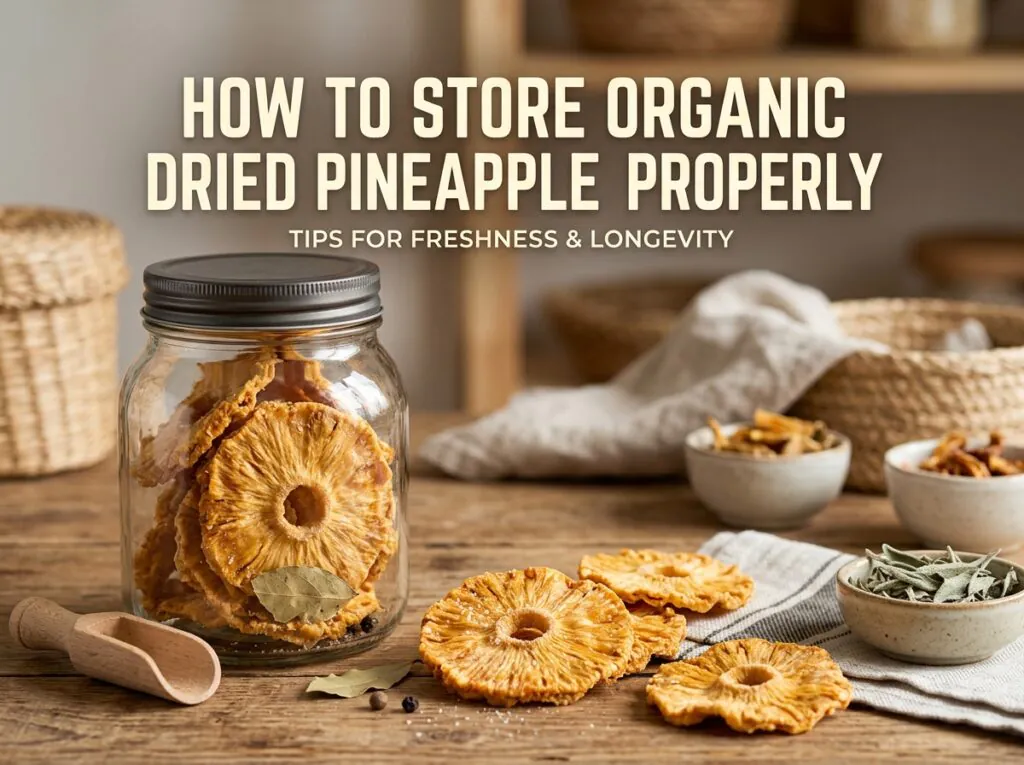
Whether you stock your home pantry or manage inventory for a restaurant, food service company, or bakery across Europe, sourcing quality ingredients is only half the process. When commercial kitchens and retailers choose to buy wholesale organic dried pine apple from Sahara Food EU, maintaining that factory-fresh quality relies on establishing an optimal storage environment that shields the fruit from moisture, light, heat, and air.
Why Organic Dried Pineapple Requires Special Care
Conventional dried fruits are often treated with sulfur dioxide or sodium metabisulfite to preserve their bright color and act as chemical antimicrobials. Organic dried pineapple, by contrast, is completely un-sulfured. It is dried naturally using controlled low heat, which concentrates its natural sugars and retains its wholesome golden color without chemical additives.
Because organic dried fruit is entirely natural, it remains sensitive to environmental fluctuations. If exposed to ambient moisture, the natural sugars in the fruit can draw water from the surrounding air through a process known as hygroscopy. This unwanted humidity makes the slices sticky and creates an environment where mold or yeasts can develop. Understanding how to control these conditions ensures your dried pineapple stays soft, golden, and delicious for months.
The Four Enemies of Dried Fruit Shelf Life
To maximize the longevity of your organic dried pineapple, you must protect it against four primary environmental factors:
-
Moisture and Humidity: Humidity is the biggest threat to dried fruit. High humidity causes the pineapple slices to reabsorb water, leading to stickiness, clumping, and microbial growth.
-
Air (Oxygen): Oxygen triggers oxidation. Prolonged exposure to circulating air causes the fruit to darken in color, lose its crisp aroma, and develop a stale, tough texture over time.
-
Direct Light and Heat: Sunlight and heat break down the natural vitamins, fruit acids, and delicate aromatic compounds in pineapple. Storing dried fruit in a warm spot, such as near an oven or under direct sunlight, accelerates flavor loss and shortens shelf life.
-
Temperature Fluctuations: Rapid changes in room temperature cause condensation inside sealed storage containers. Water droplets on the inside of a jar or bag create moisture pockets where mold can quickly take root.
Choosing the Best Storage Containers
Selecting the right container is the foundational step in proper dried fruit storage. Avoid keeping dried pineapple in thin, unsealed plastic bags or opened cardboard cartons after purchase. Instead, opt for one of the following food-safe options:
-
Glass Mason Jars: Heavy-duty glass jars with airtight rubber or silicone gasket lids are ideal for pantry storage. Glass is non-porous, meaning it won’t absorb food odors or let ambient air seep in. Transparent glass also allows you to visually inspect your pineapple slices for any signs of moisture condensation without opening the lid.
-
Vacuum-Sealed Food Bags: Vacuum sealing removes practically all oxygen from the packaging. This method compresses the fruit slightly while preserving its chewiness and flavor for up to a year or longer. Vacuum sealing is particularly effective for commercial buyers storing bulk quantities.
-
Mylar Bags with Oxygen Absorbers: Mylar pouches provide a complete light and air barrier. Adding a small, food-grade oxygen absorber packet to the sealed bag prevents oxidation and extends shelf life significantly.
-
Heavy-Duty Zip-Lock Freezer Bags: For short-term to medium-term storage, high-density polyethylene freezer bags work well. Press out as much air as possible before sealing the bag completely.
Step-by-Step Instructions for Storing Dried Pineapple
Following a structured approach ensures your dried fruit maintains its prime texture and taste throughout its lifespan.
Step 1: Inspect the Fruit Upon Opening
When opening a bulk package or fresh shipment, check that the pineapple rings or pieces are uniformly dried, pliable, and free from external moisture.
Step 2: Portion Your Supply
If you buy in large quantities, divide your supply into smaller, manageable portions rather than using one large container. Opening a large bin or bag repeatedly exposes the entire batch to fresh air and humidity every time. Keep one small container for immediate daily use and store the rest in sealed bulk containers.
Step 3: Seal Airtight
Place the pineapple slices loosely into your chosen container, leaving a small amount of headspace at the top. Ensure the seal, lid, or zip mechanism is closed tightly to create an impenetrable barrier.
Step 4: Choose a Dark, Cool Location
Store your sealed containers in a cool, dark pantry, cupboard, or storage cellar. The ambient temperature should consistently remain below 20°C (68°F) for optimal shelf life.
Pantry vs. Refrigeration vs. Freezing
Depending on how quickly you plan to consume or use your organic dried pineapple, choose the right location:
| Storage Location | Ideal Temperature Range | Average Shelf Life | Best For |
| Pantry / Cupboard | 15°C – 20°C (59°F – 68°F) | 6 to 9 Months | Daily snacking, active baking needs, fast inventory turnover |
| Refrigerator | 2°C – 4°C (35°F – 39°F) | 9 to 12 Months | Humid climates, open bulk bags, preserving soft texture |
| Freezer | Below -18°C (0°F) | 12 to 18+ Months | Long-term commercial storage, seasonal backup stock |
Note on Freezing: When thawing frozen dried pineapple, allow the sealed container to reach room temperature before opening it. This prevents condensation from forming on the cold fruit slices when they hit warm room air.
Identifying Signs of Spoilage
Knowing how to check for freshness guarantees food safety in home and commercial kitchens alike:
-
Off Odors: Fresh organic dried pineapple smells sweet, fruity, and slightly floral. A sour, yeasty, or vinegary smell indicates fermentation caused by moisture ingress.
-
Visible Mold: Any white, green, or fuzzy spots mean moisture was present. Discard the entire container immediately if mold appears.
-
Extreme Hardness: If dried pineapple is left unsealed, it loses all internal moisture and becomes unpleasantly tough or rock-hard.
-
Severe Discoloration: While natural organic dried fruit darkens slightly over time due to natural caramelization of fruit sugars, a pitch-black appearance accompanied by a bitter taste indicates severe oxidation.
Premium Organic Ingredients from Sahara Food EU
Storing organic dried pineapple properly is simple when you start with high-quality, perfectly dehydrated fruit. By protecting your stock from moisture, air, and heat, you can enjoy rich tropical flavor and nutritional goodness all year round.
At Sahara Food EU, we specialize in providing premium organic dried fruits, dates, nuts, and seeds to food manufacturers, bakeries, and wholesale distributors across Europe. Explore our extensive product catalog today to source clean, ethically grown ingredients for your business.