
Knowing how to store organic raisins properly is the key to preserving their natural sweetness, plump texture, and rich nutritional value for months or even years. Because organic raisins are produced without synthetic preservatives or chemical sulfur dioxide, they lack the artificial shield that keeps conventional dried fruits indefinitely soft on grocery store shelves.
When you buy wholesale oganic dried fruits from Sahara Food EU, you are receiving a premium, minimally processed product. To protect your investment and maintain the peak quality of these sun-ripened gems, implementing correct storage techniques is essential. Whether you are a home baker stocking up or a commercial business managing inventory, this guide covers everything you need to keep your organic raisins fresh, juicy, and flavor-packed.
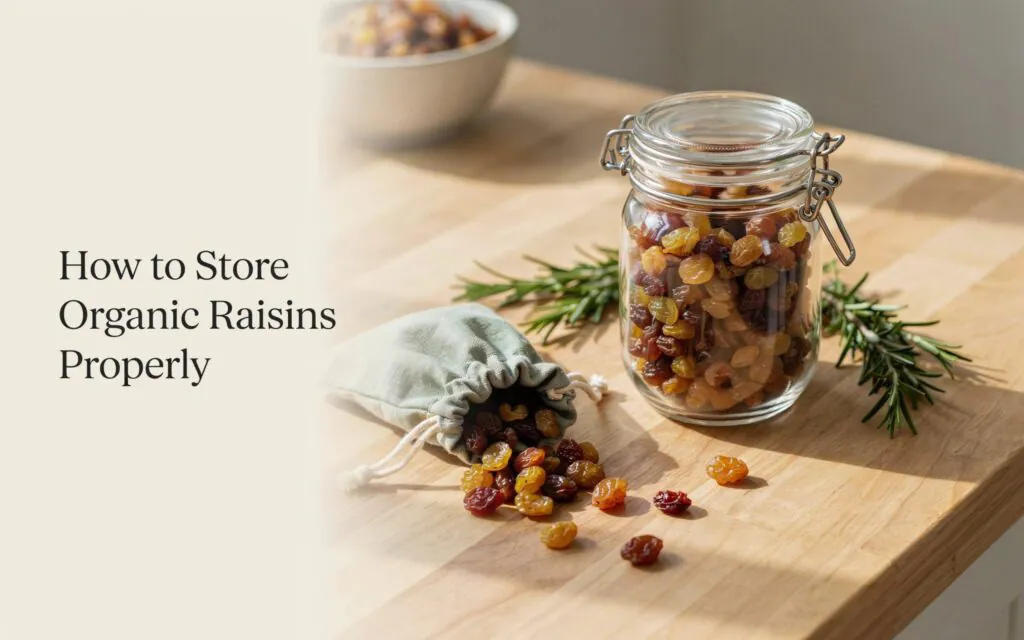
The Enemies of Organic Raisins: Moisture, Air, and Heat
To store raisins effectively, you must understand what causes them to spoil. Unlike fresh fruit, dried fruit has had most of its water content removed, making it highly shelf-stable. However, organic raisins are still vulnerable to environmental factors:
-
Excessive Moisture: If raisins absorb humidity from the air, it creates a breeding ground for mold and yeast.
-
Air Exposure (Oxygen): Continuous exposure to air dries out the natural sugars, turning a plump raisin into a hard, unpalatable pebble.
-
High Temperatures: Heat accelerates the breakdown of the fruit’s natural sugars and can cause the raisins to lose their deep color and rich flavor profiles.
By controlling these three elements, you can dramatically extend the shelf life of your organic stock.
Step-by-Step Guide to Storing Organic Raisins Properly
1. Choose the Right Container
The original packaging is rarely ideal for long-term storage once it has been opened. Transfer your raisins to an airtight container as soon as possible.
-
Glass Jars: Mason jars with tight-fitting lids are excellent because glass does not leach chemicals or odors into the fruit.
-
Food-Grade Plastic: Heavy-duty, BPA-free plastic containers with silicone seal lids work beautifully.
-
Mylar Bags: For large wholesale quantities intended for long-term storage, vacuum-sealed Mylar bags with oxygen absorbers offer the ultimate protection.
Tip: Ensure the container is completely dry before adding the raisins. Even a single drop of water can cause a mold outbreak inside a sealed jar.
2. Find a Cool, Dark Location
For daily or weekly use, keeping your raisins in the pantry is perfectly acceptable, provided the conditions are right. Store the airtight container in a cool, dark cupboard away from heat-generating appliances like the oven, dishwasher, or direct sunlight. The ideal pantry temperature should stay below 20°C (68°F).
3. Utilize Refrigeration for Long-Term Freshness
If you have purchased a large quantity or live in a warm, humid climate, the refrigerator is your best friend. Cold storage slows down the natural degradation process.
When sealed tightly in an airtight container and kept in the fridge, organic raisins can maintain their premium texture and flavor for up to 12 to 18 months. The cold temperature stops the natural sugars from crystallizing on the skin, keeping them soft and pliable.
4. Freezing for Extended Preservation
Can you freeze organic raisins? Absolutely. If you need to store them for over a year, freezing is a highly effective option. Wrap the raisins tightly in freezer-safe bags, removing as much air as possible before sealing. Frozen raisins can last up to two years. When you are ready to use them, simply transfer the desired amount to the countertop and let them come to room temperature naturally—they thaw very quickly.
Understanding Sugar Crystallization (Sugaring)
Over time, you might notice a white, powdery coating forming on the surface of your stored raisins. Many people mistake this for mold and throw the fruit away. In reality, this is a natural process called sugar crystallization or “sugaring.”
Because organic raisins contain concentrated natural fructose, those sugars can sometimes migrate to the surface and crystallize if the fruit experiences temperature fluctuations.
How to Tell the Difference:
-
Sugar: Looks like tiny white crystals, feels gritty to the touch, and dissolves instantly if you rinse the raisin under warm water. It is perfectly safe to eat.
-
Mold: Looks fuzzy, gray, or green, has a musty odor, and does not dissolve in water. If you see mold, the entire batch must be discarded.
How to Revive Dried-Out Raisins
If a container was left open and your organic raisins have turned hard and dry, you don’t need to waste them. You can easily rehydrate them using a simple kitchen trick:
-
Place the dry raisins in a heat-proof bowl.
-
Pour boiling water over them until they are completely submerged.
-
Let them sit for 5 to 10 minutes until they plump back up.
-
Drain the water thoroughly and pat them dry with a clean towel.
Note: Only rehydrate the amount of raisins you plan to use immediately. Once you introduce water back into the fruit, it can no longer be stored long-term.
Conclusion
Organic raisins are a versatile, nutrient-dense ingredient that brings natural sweetness to baked goods, savory dishes, and daily snacks. By keeping them away from moisture, sealing them in airtight glass or plastic, and utilizing the refrigerator for large quantities, you ensure that every raisin stays as fresh as the day it was packed.
At Sahara Food EU, we provide top-tier organic dried fruits sourced with care. Following these storage steps helps preserve that high quality from our warehouse straight to your kitchen.