
Deciding between Organic Date Paste vs Maple Syrup isn’t just about sweetness; it’s about choosing the functional profile that best serves your recipe’s texture and nutritional goals. While both are celebrated as natural alternatives to refined white sugar, they behave very differently in the kitchen and offer distinct physiological benefits.
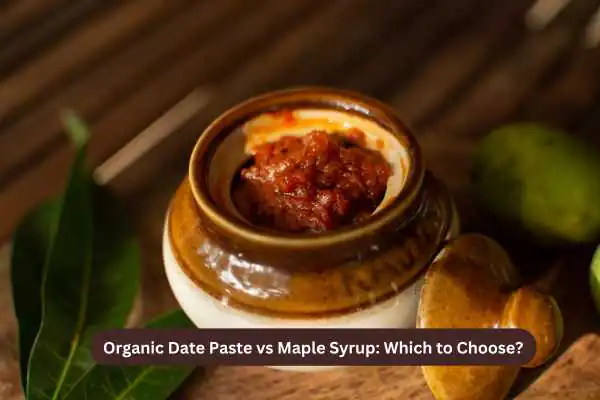
If you are a manufacturer or a dedicated home baker looking to elevate your product line, you can buy wholesale organic date paste directly from Sahara Food EU to ensure you are working with premium, additive-free ingredients. In this guide, we’ll break down the chemistry, nutrition, and culinary applications of these two liquid golds to help you make an informed choice.
The Nutritional Breakdown: Fiber vs. Minerals
The most significant difference between date paste and maple syrup lies in their physical state. Date paste is a “whole food” sweetener, whereas maple syrup is a concentrated sap.
Organic Date Paste: The Fiber Powerhouse
Because date paste is made by blending whole organic dates with water, it retains all the dietary fiber of the original fruit. This fiber acts as a natural “speed bump” for your metabolism, slowing the absorption of sugar into the bloodstream.
-
Antioxidants: Dates are exceptionally high in polyphenols and flavonoids.
-
Potassium: Essential for heart health and muscle function.
-
Magnesium: Aids in over 300 biochemical reactions in the body.
Maple Syrup: The Mineral Specialist
Maple syrup is produced by boiling down the sap of maple trees. While it lacks the fiber of date paste, it is surprisingly high in specific minerals.
-
Manganese: Vital for bone health and metabolism.
-
Zinc: Supports immune function.
-
Lower Calories: Per tablespoon, maple syrup generally contains fewer calories than date paste because of its higher water content.
Culinary Performance: Texture and Binding
Choosing between these two often comes down to the “mechanical” role the sweetener plays in your recipe.
When to Choose Date Paste
Date paste is thick, jammy, and slightly fibrous. This makes it an incredible binder.
-
Energy Bars & Balls: Its stickiness holds oats, nuts, and seeds together without the need for additional fats or syrups.
-
Rich Brownies: It adds a fudgy, dense crumb that maple syrup cannot replicate.
-
Caramel Substitution: When blended with a touch of sea salt and tahini, it creates a “healthy” caramel that stays stable at room temperature.
When to Choose Maple Syrup
Maple syrup is a true liquid. It integrates seamlessly into batters and liquids where a smooth mouthfeel is non-negotiable.
-
Pancakes & Waffles: The classic pour-over use case.
-
Salad Dressings: It emulsifies perfectly with oils and vinegars.
-
Glazes: Because it contains more water and less fiber, it reduces down into a shiny, crisp glaze for roasted vegetables or proteins.
Sweetness Intensity and Flavor Profile
Maple Syrup has a very distinct, “woodsy” flavor. Depending on the grade (Grade A Golden vs. Grade A Very Dark), it can range from a light floral sweetness to a deep, almost smoky molasses flavor. If your goal is for the sweetener to be a prominent flavor note, maple syrup is the winner.
Organic Date Paste has a deep, caramelized, sun-ripened flavor. It is often described as “earthy.” Because it is a whole fruit, it doesn’t just taste like sugar; it tastes like dried fruit. In baking, it tends to blend into the background more than maple syrup, providing a rich “base” sweetness that complements chocolate, cinnamon, and nut butters beautifully.
Impact on Blood Sugar: The Glycemic Index
For health-conscious consumers, the Glycemic Index (GI) is a major factor.
-
Date Paste (GI approx. 45-50): Considered low-to-medium. The presence of fiber significantly blunts the insulin response.
-
Maple Syrup (GI approx. 54): Slightly higher than dates but still lower than refined table sugar (GI 65).
If you are formulating products for the diabetic-friendly or “slow-carb” market, date paste offers a slight edge due to its fiber content.
Shelf Life and Storage
Maple Syrup is highly shelf-stable due to its high sugar concentration. Once opened, it must be refrigerated to prevent mold growth, but it can last for a year or more.
Organic Date Paste is more sensitive because it contains more moisture and whole fruit solids. It must be stored in an airtight container in the fridge. For industrial users, buying in bulk requires careful temperature management to ensure the natural sugars don’t ferment over time.
Summary Table: At a Glance
| Feature | Organic Date Paste | Maple Syrup |
| Fiber Content | High (Whole fruit) | Zero |
| Best For | Binding, fudgy textures | Pouring, glazes, dressings |
| Flavor | Caramel, earthy | Woodsy, floral, smoky |
| Glycemic Index | Lower (~47) | Moderate (~54) |
| Whole Food? | Yes | No (Processed sap) |
Final Verdict: Which to Choose?
Choose Organic Date Paste if you want a nutrient-dense, whole-food sweetener that adds moisture and binding power to your baking. It is the gold standard for “clean label” energy snacks and vegan desserts.
Choose Maple Syrup if you need a clean, liquid sweetener that dissolves easily and provides that iconic, thin-syrup consistency for toppings or light glazes.
At Sahara Food EU, we specialize in the bulk supply of high-quality organic date products. Whether you are reformulating an existing recipe or launching a new health food line, our organic date paste provides the consistency and purity your customers demand.