
Choosing Organic Date Syrup vs Refined Sugar for Baking is a decision that impacts not just the flavor of your desserts, but the entire nutritional profile of your kitchen creations. As more bakers across the EU move away from processed ingredients, this liquid gold has emerged as the premier alternative for those seeking depth and health in every bite.
For commercial bakeries and home enthusiasts looking to make the switch, sourcing Organic Date Syrup in Bulk from Sahara Food EU ensures that you have a consistent, high-quality supply of this natural sweetener. Unlike the empty calories found in white sugar, date syrup often referred to as “Silan”—retains the soul of the fruit, offering a complex profile that refined sweeteners simply cannot match.
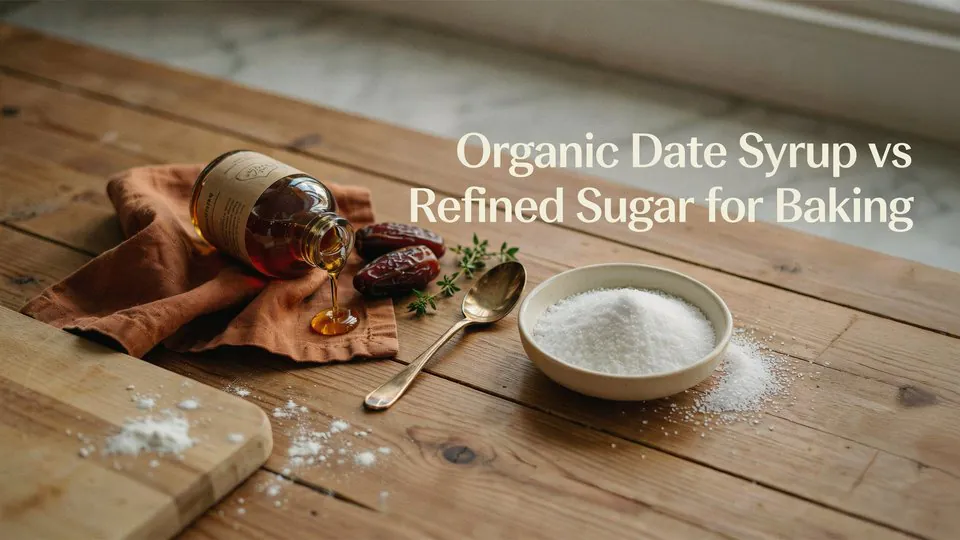
The Nutritional Void of Refined Sugar
To understand why date syrup is superior, we first have to look at what refined sugar actually is. White table sugar is a highly processed product, usually derived from cane or beets. During the refining process, every bit of fiber, mineral, and vitamin is stripped away. What remains is 100% sucrose—a substance that provides a rapid energy spike but offers zero biological benefit to the body.
Refined sugar is “empty.” It places a burden on the liver and causes significant insulin spikes. In baking, its only real job is to provide sweetness and structure, but it contributes nothing to the functional wellness of the person eating the final product.
Why Organic Date Syrup is a Nutritional Powerhouse
Organic date syrup is essentially liquefied dates. Because the process involves simmering the fruit and straining it without harsh chemical bleaching or extreme centrifugal force, the nutrients stay intact.
1. The Mineral Edge
Date syrup is naturally rich in potassium, magnesium, and iron. Potassium is vital for heart health and muscle function, while magnesium plays a role in over 300 biochemical reactions in the human body. When you bake with date syrup, you are adding these essential minerals back into your cookies, cakes, and breads.
2. Antioxidant Concentration
Dates are famous for their high concentration of polyphenols and flavonoids. These antioxidants help combat oxidative stress. Studies have shown that date syrup actually possesses antibacterial properties that refined sugar lacks. While baking involves heat, starting with an antioxidant-rich sweetener is always preferable to a chemically processed one.
3. A Lower Glycemic Impact
While date syrup is still a sugar, its Glycemic Index (GI) is generally lower than that of refined white sugar. The presence of trace fibers and a more complex sugar structure means the body processes it more steadily, reducing the aggressive “sugar crash” that follows most traditional desserts.
Baking Performance: Texture, Color, and Flavor
Switching to organic date syrup isn’t just a health choice; it’s a culinary one. It changes the physics of your doughs and batters in fascinating ways.
The Maillard Reaction and Rich Color
Because date syrup contains natural fructose and glucose along with amino acids, it undergoes the Maillard reaction more readily than sucrose. This means your baked goods will achieve a deep, golden-brown hue much faster. It gives loaves of bread and muffins a “rustic” professional look that white sugar can’t replicate.
Moisture Retention
Date syrup is a humectant, meaning it attracts and holds onto moisture. If you’ve ever struggled with dry, crumbly gluten-free cakes or vegan brownies, date syrup is your solution. It creates a “fudgy” and dense crumb that keeps your bakes fresh for days longer than those made with granulated sugar.
The Flavor Profile
Refined sugar tastes like “sweet.” That’s it. Organic date syrup, however, tastes like caramel, molasses, and dark honey with hints of vanilla. It adds a “third dimension” to chocolate recipes and complements warm spices like cinnamon, nutmeg, and cardamom perfectly.
Conversion Guide: How to Swap Sugar for Date Syrup
You cannot simply swap one cup of sugar for one cup of date syrup without making minor adjustments to your recipe. Since syrup is a liquid, you need to balance the hydration.
-
The Ratio: Use 2/3 to 3/4 cup of organic date syrup for every 1 cup of refined sugar.
-
Liquid Adjustment: Reduce the other liquids in your recipe (milk, water, or juice) by about 1/4 cup for every cup of syrup used.
-
Temperature Control: Because it browns faster, lower your oven temperature by about 10-15°C (25°F) and bake for a slightly longer time to ensure the center is cooked before the edges burn.
The Environmental and Ethical Choice
At Sahara Food EU, we emphasize the “organic” aspect of our date syrup for a reason. Conventional date farming can involve heavy pesticide use to manage desert pests. Organic cultivation relies on natural cycles and soil health.
Furthermore, refining cane sugar is an incredibly water-intensive and chemically heavy industrial process. Date syrup production is significantly more straightforward and environmentally “light,” especially when sourced from regions where dates grow natively and sustainably.
Conclusion
The battle between Organic Date Syrup vs Refined Sugar for Baking has a clear winner for the modern, health-conscious baker. Date syrup provides a depth of flavor, a moist texture, and a mineral-rich profile that refined sugar simply cannot provide.
Whether you are looking to improve the nutritional value of your family’s snacks or you are a professional baker aiming to capture the “clean label” market in the EU, making the switch to date syrup is a step toward a more flavorful and functional future.