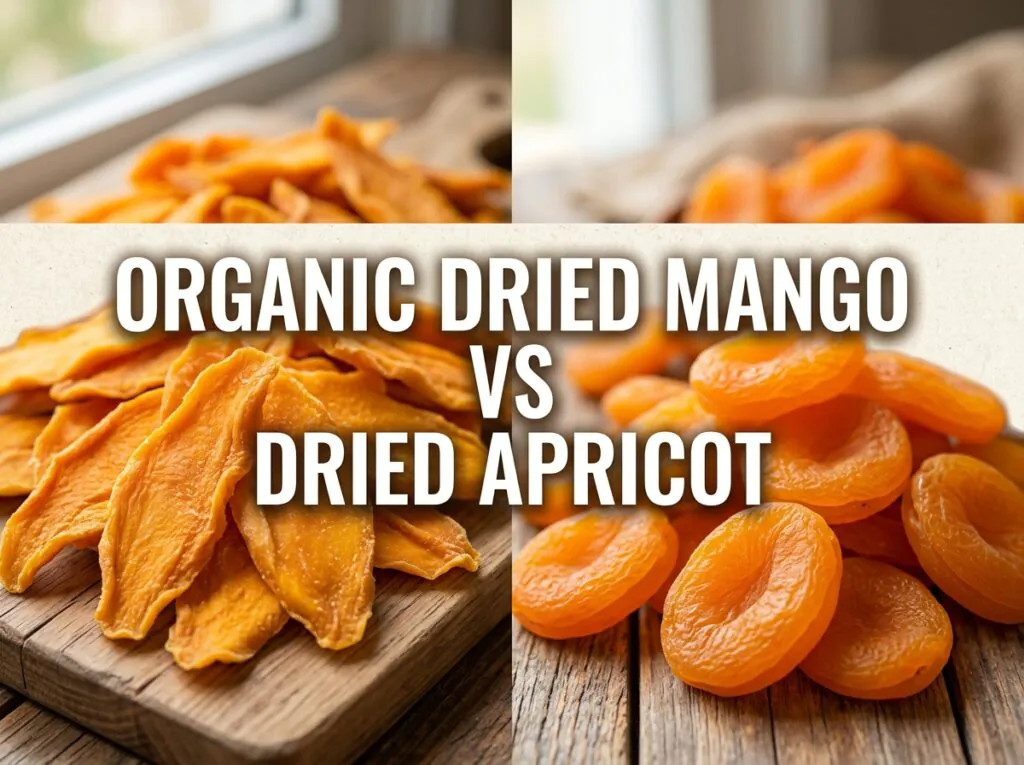
Choosing between organic dried mango vs dried apricots comes down to finding the perfect balance between tropical indulgence and Mediterranean nutritional density. Both fruits serve as exceptional clean-label pantry staples, but they offer distinct advantages in taste, texture, and micronutrient profiles.
When manufacturing premium snack mixes, supplying high-end retail shelves, or developing artisan bakeries, sourcing managers across Europe frequently choose to buy wholesale Organic Dried Mango in bulk alongside our world-class Turkish apricots. For Sahara Food EU, the priority is delivering premium sun-dried products completely free from sulfur dioxide preservatives, added sugars, or chemical processing.
1. Taste and Textural Profile: Tropical Chew vs. Velvet Tang
The most immediate contrast between these two popular dried fruits lies in their sensory characteristics.
-
Organic Dried Mango: Features an intensely vibrant flavor that captures the pure sweetness and underlying tang of fresh, tree-ripened tropical mangoes. True organic mango is sun-dried without sugar infusions, resulting in a firm, leather-like “fruit-jerky” chew that naturally extends chewing satisfaction and helps manage appetite cues.
-
Organic Dried Apricots: Provide a plump, soft, and velvety consistency. They balance a subtle, honeyed sweetness with a gentle acidity. Because Sahara Food EU supplies unsulphured organic apricots, their color is a natural, rich earthy brown rather than the synthetic neon-orange of chemically treated varieties.
2. Micronutrient Showdown: Vitamin A vs. Vitamin C
While both fruits are packed with essential vitamins, they prioritize entirely different aspects of cellular health.
The Vitamin A and Iron Champion: Dried Apricots
If your dietary objective is supporting eye health, red blood cell production, or iron absorption, dried apricots have a clear physiological advantage. They are exceptionally dense in Beta-Carotene, which the human body efficiently synthesizes into Vitamin A. This vitamin is non-negotiable for macular health, night vision, and mucous membrane defense. Furthermore, dried apricots deliver a notable plant-based source of Non-Heme Iron, making them a vital natural snack for individuals combating iron deficiency or following strict plant-based diets.
The Vitamin C and Antioxidant Powerhouse: Dried Mango
On the other side of the ledger, organic dried mango excels in protecting immune defenses and skin elasticity through its high Vitamin C preservation. Even after the dehydration process, high-quality organic mango retains a robust percentage of ascorbic acid, which acts as a primary antioxidant that stimulates collagen synthesis and blocks environmental free radical damage. Additionally, mango strips are uniquely rich in Amangiferin, a specific plant polyphenol studied for its therapeutic anti-inflammatory properties.
3. Carbohydrate Dynamics and Glycemic Impact
For fitness enthusiasts, diabetic consumers, and functional food formulators, understanding how these fruits affect glucose regulation is vital.
| Nutritional Indicator (Per 100g) | Organic Dried Mango | Organic Dried Apricots |
| Primary Micronutrient Focus | Vitamin C, Vitamin E, Polyphenols | Vitamin A, Iron, Potassium |
| Fiber Density | Moderate (~5-7g) | High (~7-8g) |
| Texture Style | Firm, resilient, chewy | Soft, plump, easily pureed |
| Glycemic Impact | Moderate | Low |
Dried apricots possess a lower overall glycemic index compared to dried mango. This is driven by their specific fruit-sugar ratios and high concentration of water-soluble fibers, which slow down gastric emptying. Dried mango provides a more immediate, easily accessible release of natural glucose and fructose, positioning it as an ideal clean energy fuel directly before or during endurance training.
4. Mineral Profile: Potassium vs. Cellular Enzymes
Maintaining operational fluid balance and stable muscular contractions requires steady dietary mineral inputs.
Organic dried apricots are a superb plant-source of Potassium. Just a single handful helps counteract the vascular stress caused by modern sodium-heavy diets, allowing arterial walls to relax and lowering systemic blood pressure.
Conversely, organic dried mango provides a well-balanced spread of trace minerals like Copper and Magnesium. These minerals act as fundamental building blocks for cellular energy production (ATP synthesis) and bone matrix structural maintenance.
5. Industrial and Culinary Application in European Markets
The operational decision to choose mango or apricot often depends on your specific manufacturing or culinary endpoint:
-
Granola and Trail Mix Formulations: Dried mango slices cut cleanly into resilient strips that maintain structural independence inside dry packaging without clumping together.
-
Commercial Baking and Confectionery: Dried apricots easily absorb moisture during hydration steps, transforming efficiently into smooth, stable fruit fillings for tarts, multi-grain artisan loaves, and natural energy bars.
-
Direct Consumer Snacking: Premium retail packaging benefits from a balanced strategy—offering the tropical novelty of clean dried mango alongside the comforting, familiar daily utility of wholesome dried apricots.
The Verdict
Neither fruit is inherently superior; rather, they serve distinct functional roles in a clean diet. If your priority is a low-glycemic, iron-and-potassium-dense ingredient with a soft texture, organic dried apricots are your ideal selection. If you require an energy-boosting, vitamin-C-rich snack with an engaging, long-lasting chew and a tropical flavor profile, organic dried mango claims the crown.
At Sahara Food EU, we eliminate the guesswork by ensuring both varieties are sourced from strictly certified organic growers, providing wholesale BRC-approved inventory that satisfies the highest European safety and quality benchmarks.