
Evaluating the nutritional showdown between organic dried mango vs dried pineapple is essential for any clean-label brand, baker, or retail business looking to curate the ultimate premium tropical snack collection. Both of these dehydrated powerhouses offer concentrated tropical flavors, but they serve completely distinct purposes when it comes to their exact nutritional profiles, textures, and culinary applications.
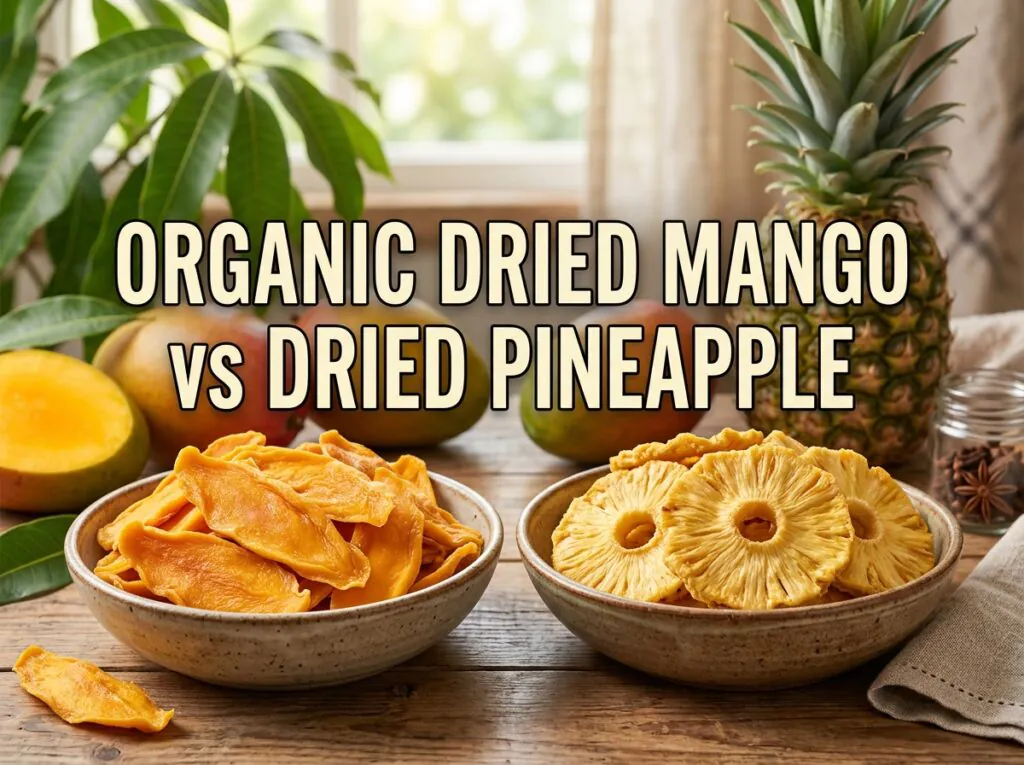
When food manufacturers and sourcing managers across Europe want to capture the premium fruit market, they choose to buy wholesale Organic Dried Mango in bulk alongside raw dried pineapple rings from Sahara Food EU. Transitioning away from conventional options to certified organic varieties guarantees your inventory is entirely free from synthetic sulfur dioxide treatments, added refined sugars, and chemical preservatives—leaving your customers with pure, unadulterated fruit flavors.
1. Nutritional Profile: Vitamins, Minerals, and Enzymes
While both fruits belong to the premium tropical class, their micro-nutrient compositions are highly distinct and favor different health outcomes.
The Organic Dried Mango Blueprint
Dried mango is a stellar plant-based source of fat-soluble vitamins. It is incredibly rich in Vitamin A (via beta-carotene) and Vitamin C. A single serving provides a massive boost to daily cellular repair networks and immune system defense. Additionally, organic mangoes carry a unique polyphenolic compound called mangiferin, which has been studied for its strong antioxidant and anti-inflammatory attributes.
The Organic Dried Pineapple Blueprint
Dried pineapple counters with an exceptional concentration of water-soluble minerals, specifically Manganese and Vitamin C. However, its primary physiological superpower is Bromelain. Bromelain is a highly specialized mixture of protein-digesting enzymes found exclusively in the pineapple plant. This enzyme complex makes dried pineapple a functional powerhouse for breaking down heavy meals and relieving systemic tissue inflammation.
2. Textural Differences and Culinary Performance
The structural behavior of these two fruits under dehydration changes how they interact with recipes and automated production lines.
| Attribute | Organic Dried Mango | Organic Dried Pineapple |
| Texture | Chewy, pliable, leather-like strips | Fibrous, dense, resilient rings or chunks |
| Moisture Retention | Holds a consistent, “jammy” internal moisture | High outer surface stickiness due to natural sugars |
| Best For | Luxury trail mixes, chopped baking inclusions, direct snacking | Granola clusters, commercial muesli, tropical energy bars |
| Slicing Ease | Cuts cleanly into strips or small dice | Requires heavy-duty dicing due to tough core fibers |
Organic dried mango strips maintain an easy-to-bite, velvety chewiness that makes them perfect for upscale consumer grab-and-go pouches. On the flip side, organic dried pineapple rings retain a slightly tougher, structural bite because of their natural core fibers, adding fantastic texture to rustic breads and heavy baking batters.
3. Sugar Concentration and Energy Release Profiles
Because dehydration removes the water weight from whole fruit, the natural sugars and caloric counts become highly concentrated in both options.
Organic dried mango presents a balanced blend of natural fructose and sucrose, bound tightly within a framework of soluble dietary fiber. This structural composition allows the body to break down the natural fruit sugars gradually, offering a long-sustained energy curve that avoids the sharp insulin crashes common with processed sweets.
Organic dried pineapple contains a slightly higher ratio of simple sugars relative to its weight. This gives it a punchier, immediate sweetness. When consumed as a pre-workout snack or active recovery fuel, dried pineapple delivers a faster surge of usable carbohydrates to fatigued muscle tissues, making it a favorite among endurance athletes across Europe.
4. The Organic Difference: Eliminating Sulfites
For both dried mango and dried pineapple, choosing certified organic quality is completely non-negotiable for a clean-label food business.
Conventional dried tropical fruits are heavily treated with sulfur dioxide gas to unnaturally preserve their neon colors and extend shelf life indefinitely. Sulfites are a major allergen known to trigger severe respiratory distress, headaches, and digestive upset in sensitive consumers.
Certified organic dried mango and pineapple from Sahara Food EU are naturally air-dried without any chemical intervention. While this gives them a deeper, naturally amber hue, it preserves the authentic flavor of the fruit and guarantees a 100% clean-label product that complies with strict European organic regulations.
5. Storage Longevity and Commercial Handling
From a business logistics standpoint, both products behave beautifully when stored correctly. Because their water activity levels have been reduced to safe thresholds, they naturally resist microbial growth.
-
Temperature Stability: To maintain the vibrant amber color of organic mango and the deep golden hue of organic pineapple, bulk stock should ideally be kept in cool, dark, and dry conditions (below 15°C).
-
Moisture Defense: Both fruits are highly hygroscopic, meaning they will pull moisture out of the air if left exposed. Storing them in tightly sealed, food-grade barrier bags prevents them from softening or losing their signature chew.
Conclusion: Which Tropical Fruit Wins?
Ultimately, comparing organic dried mango vs dried pineapple isn’t about choosing a single winner; it is about choosing the right tool for your specific application. If your product line demands a smooth, vitamin A-rich ingredient with clean cutting properties for trail mixes and snacking, organic dried mango is the premium choice. If you require a high-texture inclusion packed with digestive enzymes and intense, immediate sweetness for breakfast cereals and bars, organic dried pineapple is your go-to asset.
At Sahara Food EU, we simplify your supply chain by delivering uncompromised bulk organic tropical fruits directly to your commercial facility, helping your brand set the standard for authentic European nutrition.