
Understanding why choose organic coconut over conventional coconut is a crucial turning point for anyone focused on clean eating, sustainable agriculture, and superior culinary performance. As global awareness shifts away from heavily processed commodities, discerning buyers are looking closer at how this tropical superfood is grown, harvested, and brought to market.
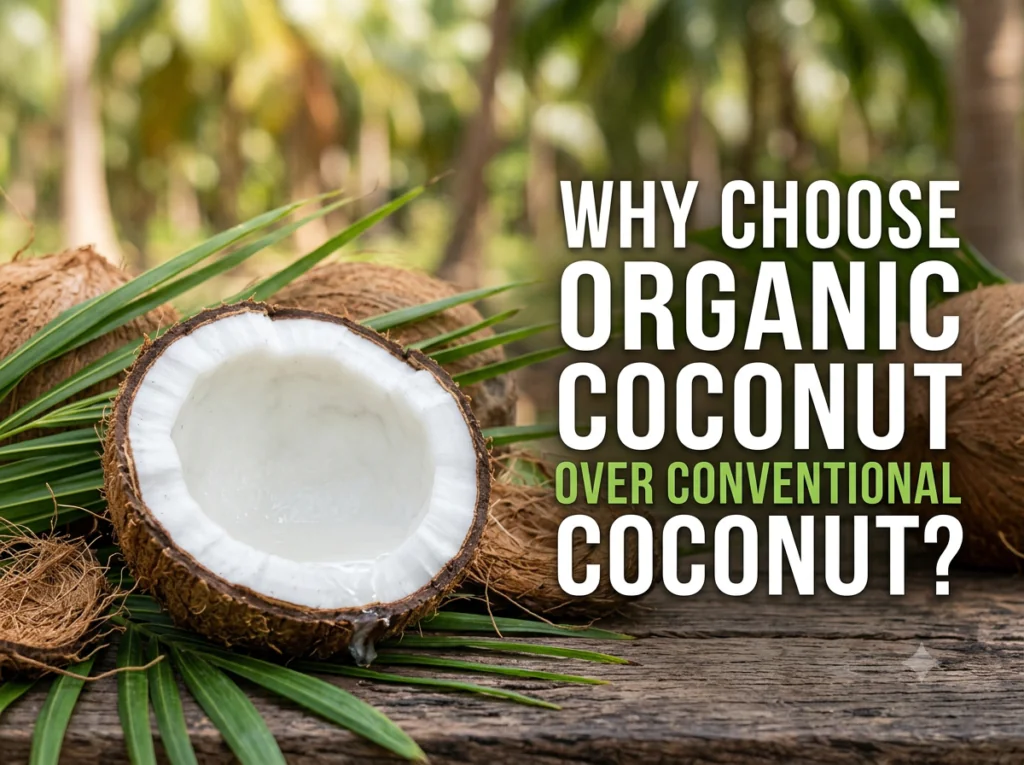
When food manufacturers, bakeries, and health brands across Europe aim to clean up their supply chains and deliver premium quality to their customers, they routinely choose to buy wholesale Organic Coconut in bulk from Sahara Food EU. Transitioning to certified organic coconut is the only way to guarantee that your ingredients remain completely untainted by the hidden chemical interventions, bleaching agents, and synthetic processing aids that characterize standard industrial production.
1. The Chemical Burden: Eliminating Synthetic Pesticides
The most immediate difference between organic and conventional coconut cultivation lies directly in the soil and tree management. Conventional plantation management frequently relies on synthetic chemical inputs to maximize immediate crop yields and deter local pests.
-
Systemic Pesticide Absorption: Conventional coconut palms are often treated with synthetic insecticides and herbicides. Because the palm absorbs these chemicals through its root network, trace residues can migrate directly into the water inside the shell and the growing white meat.
-
Chemical-Free Soils: Certified organic coconut farming strictly prohibits synthetic chemicals. Instead, farmers use natural pest management, biological controls, and organic composts. This ensures the developing fruit never encounters toxic synthetic compounds during its long growth cycle.
By eliminating these chemical inputs, organic farming delivers a final ingredient that is fundamentally cleaner, offering pure, unadulterated plant nutrition that honors the natural biological integrity of the crop.
2. Processing Discrepancies: No Sulfur Dioxide or Bleaching
The divergence between organic and conventional options becomes even more stark once the coconuts leave the trees and enter the processing facility. This stage is where conventional varieties lose much of their natural value.
To achieve a uniform, unnaturally bright white appearance and extend shelf stability, conventional shredded or desiccated coconut is routinely treated with Sulfur Dioxide (E220) or optical chemical bleaches. Sulfur dioxide is a known allergen that can trigger severe respiratory sensitivities and digestive discomfort in sensitive individuals.
Certified organic processing completely bans chemical bleaches and sulfur preservatives. Organic desiccated coconut is simply dehydrated at controlled, low temperatures, preserving its natural, creamy, off-white color and complex flavor profile without relying on synthetic stabilization.
3. Preserving Essential Nutrient Profiles
Because organic coconut palms grow at a natural, unforced pace in nutrient-rich soils, the resulting fruit exhibits a distinct structural and nutritional superiority. Conventional farming practices that rely on heavy synthetic fertilizers prioritize rapid water absorption and quick growth over dense nutrient development.
Organic coconuts maintain their natural concentrations of health-promoting fats, particularly Lauric Acid and other highly valued Medium-Chain Triglycerides (MCTs). Additionally, the lack of aggressive high-heat chemical processing ensures that delicate heat-sensitive antioxidants and crucial trace minerals—such as Manganese, Copper, and Iron—remain entirely intact. When you choose organic, you are securing the full, uncompromised biological value of the plant.
4. Protecting Fragile Coastal Ecosystems
Coconuts are predominantly grown in tropical, coastal, and island regions that possess highly delicate ecosystems. The environmental impact of conventional farming in these territories can be devastating.
The heavy runoff from synthetic fertilizers and chemical pesticides used on conventional plantations regularly leaches into local freshwater tables and flows directly into surrounding marine environments. This chemical pollution damages coral reefs, disrupts local fish populations, and compromises drinking water for nearby communities.
Organic coconut farming focuses deeply on long-term ecological balance. By utilizing cover crops, natural mulching, and sustainable composting, organic farmers preserve local biodiversity, prevent soil erosion, and safeguard fragile coastal environments from chemical degradation.
5. Pure Flavor Authenticity and Texture
From a purely culinary and manufacturing perspective, the taste difference between the two varieties is undeniable. Because conventional coconut is stripped by chemical washing and often artificially enhanced, it frequently tastes flat or carries a subtly chemical aftertaste.
Organic coconut retains its natural, rich, and distinctly aromatic oils. Whether you are using shredded coconut in premium granola, integrating coconut flour into gluten-free baking, or using coconut cream in culinary dishes, the authentic tropical flavor shines through clearly. The texture remains naturally soft and chewy rather than dry and brittle, directly elevating the overall quality of your final products.
Conclusion
The decision of why choose organic coconut over conventional coconut extends far beyond a simple labeling preference. It is a fundamental choice that directly impacts your health, consumer safety, processing transparency, and global environmental sustainability.
At Sahara Food EU, we are dedicated to bridging the gap between ethical tropical agriculture and European food production. By choosing our certified organic coconut products, you ensure that your commercial offerings or home kitchen creations remain completely uncompromised, natural, and incredibly flavorful.